Why understanding people matters even more in the age of AI
As AI speeds up decision-making, staying close to consumers becomes the real differentiator.
Tim Wragg
20 August 2026
5 min read
Based on Forbes article “Building empathy in a post-truth and low-trust world” by Tim Wragg.
AI can reveal patterns in consumer behaviour, but it cannot fully explain the people behind the data. In the age of AI, brands need consumer closeness to understand motivations, cultural context and lived experiences and turn that understanding into meaningful action.
AI can write copy, analyse customer feedback, identify trends and generate campaign ideas in seconds. Yet one challenge remains unmistakably human: understanding why people think, feel and behave the way they do. As organisations adopt more AI-powered tools, the question is no longer whether they have enough information. The question is whether they truly understand the people behind it.
Why isn’t more consumer data enough?
Brands have never had more information about consumers. Every purchase, search, review, interaction and conversation creates signals that help organisations understand what people do. AI has accelerated this capability. It can process vast amounts of information in seconds, identify patterns at scale and surface connections that would have taken weeks or months to uncover manually. Yet despite all this data, many organisations still struggle to answer a fundamental question: why are people behaving this way?
Because behaviour doesn’t happen in a vacuum. Data can show that consumers are switching brands, abandoning baskets or engaging with certain content. It is far less effective at revealing the emotional, social and cultural forces behind those actions. It rarely captures the frustrations people are navigating, the trade-offs they are making or the realities shaping their decisions. At the same time, many organisations are becoming further removed from the people they serve. Decisions are increasingly made through dashboards, reports and AI-generated summaries rather than direct conversations with consumers. The result is a growing gap between what brands know about consumers and how well they truly understand their lives. And that gap matters more than ever. As AI becomes more accessible, the ability to analyse data and generate content is no longer a competitive advantage on its own. Those capabilities are increasingly available to everyone. What remains harder to replicate is a deep understanding of people: their motivations, emotions, communities and cultural realities.
In a world where trust is fragile and consumers are surrounded by an endless stream of content, information and AI-generated messages, brands need more than data. They need understanding. Because AI can identify patterns, but human understanding reveals what those patterns mean and what organisations should do about them.
Culture lives in nuance
Consumer behaviour never happens in isolation. People’s decisions are shaped by cultural influences, social expectations and changing realities. Algorithms are excellent at identifying patterns, but culture helps reveal what those patterns mean. It exists in contradictions, tensions and unspoken meanings that are difficult to capture through data alone.
We see this in our work with clients. For Barbie, for example, we partnered with Mattel to explore the cultural forces shaping girls’ self-belief. Space Doctors, our cultural strategy partner, combined semiotic analysis, cultural research, expert interviews and influencer perspectives across six markets to understand how cultural bias can influence girls’ confidence from an early age. Those insights helped identify a meaningful role for Barbie: inspiring girls to imagine broader futures and challenge perceived barriers. The result was a brand strategy grounded in cultural relevance rather than nostalgia.
Looking beyond individual behaviour to the culture surrounding it reveals opportunities that data alone can easily miss.
From audiences to communities
Culture becomes tangible in the communities people create and participate in. People are more than their demographics. They are also shaped by the communities, passions, interests, values and shared experiences that influence how they see the world. For brands, this means moving beyond simply reaching audiences and finding meaningful ways to participate in the worlds people already care about. The question shifts from “How do we reach more people?” to “How do we become genuinely relevant in people’s worlds?”
Consider running communities, gaming communities or skincare communities. Within each of these spaces, people develop their own language, norms, rituals and expectations. Simply targeting these groups through advertising rarely creates meaningful connection. Brands need to understand what matters within these communities and find a role that feels authentic rather than interruptive.
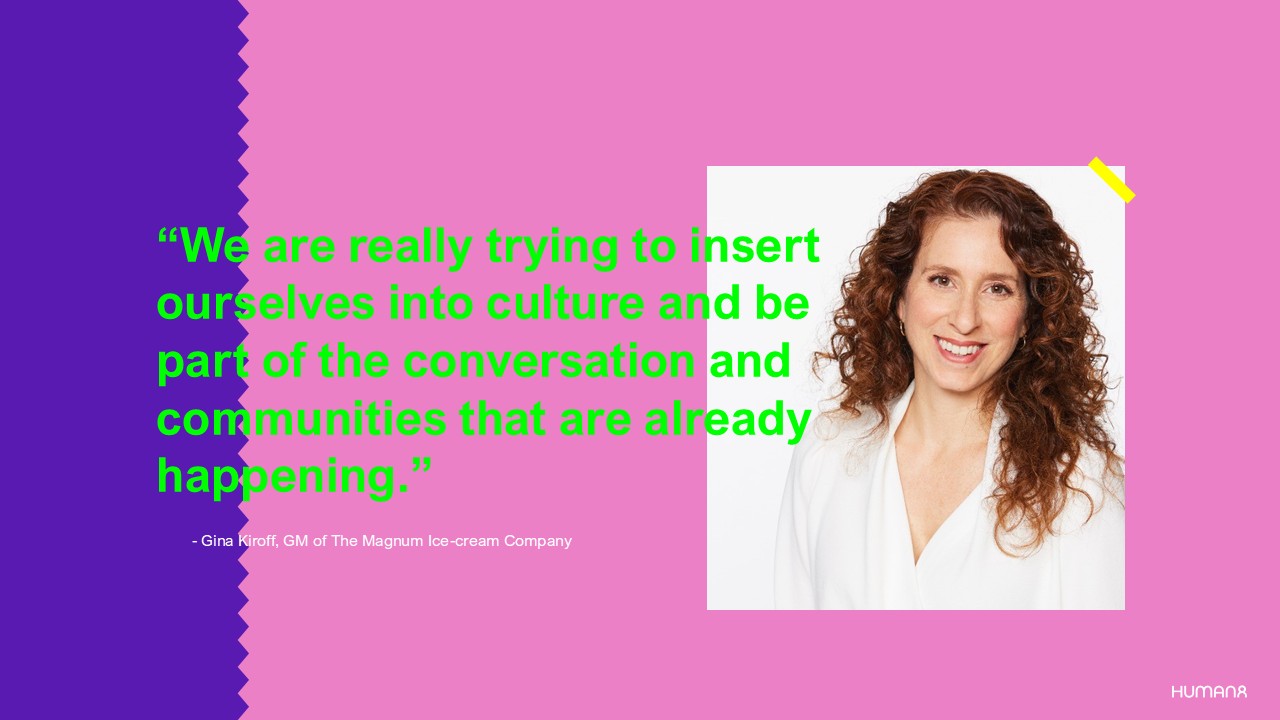
Knorr, a global food brand, is a good example of this shift. Rather than simply promoting products, the brand looked at the wider culture around food and the communities already shaping how people discover, share and enjoy cooking. By connecting with younger generations through creators, social platforms and gaming communities, Knorr found new ways to become part of everyday cooking culture. As Gina Kiroff, Chief Marketing Officer of Knorr, explains: “We are really trying to insert ourselves into culture and be part of the conversation and communities that are already happening. We want to enable home cooking and we are taking real inspiration from consumers themselves.”
Finding a place within these communities starts with curiosity, participation and a willingness to listen before deciding what to say.
Bringing consumers closer to decision-making
Understanding people requires more than occasional research projects. It requires creating regular opportunities for teams and leaders to engage directly with consumers and experience their realities firsthand.
This is why many organisations are investing in consumer closeness programmes: creating structures that bring consumer understanding into everyday decision-making. Together with Haleon, for instance, we set up Connects, helping employees engage directly with consumers and better understand the realities behind health and wellbeing decisions. With L’Oréal, BeautyTalks brings employees together with consumers, healthcare professionals and beauty experts to deepen consumer understanding across the organisation.
These programmes go beyond research. They create shared experiences that help teams make better decisions, inspire more relevant innovation and keep consumers at the centre of everyday business.
Closing the empathy gap
Building empathy in an AI-driven world requires more than collecting additional information. It requires creating meaningful connections with the people behind the data.
Three principles stand out.
- Understand people beyond the data
Combine behavioural data with cultural insight and direct conversations to uncover not just what people do, but what their behaviour means.
- Bring consumers into everyday decisions
Create regular opportunities for leaders and teams to engage directly with consumers through immersions, communities, empathy sessions or consumer closeness programmes.
- Build with people, not just for them
The strongest brands participate in people’s worlds. They listen continuously, learn alongside communities and turn empathy into action.
Care enough to understand
AI will continue to change how organisations work. It will help teams analyse information, explore possibilities and make decisions faster.
But technology is only as valuable as the understanding behind it. Organisations that combine technology with a deeper understanding of people will be better equipped to create meaningful experiences, relevant innovation and stronger relationships.
Data can explain what people do. Consumer closeness helps explain why they do it and turns that understanding into action.
FAQS
1. What is consumer closeness?
Consumer closeness is an organisation’s ability to stay connected to the real lives, motivations and experiences of the people it serves. It goes beyond analysing data by creating regular opportunities to engage directly with consumers.
2. Why is consumer empathy important for decision-makers?
Empathy helps decision-makers understand the motivations, emotions and cultural context behind consumer behaviour. This leads to more relevant products, communications and experiences.
3. Can AI replace human empathy?
No. AI can analyse data, identify patterns and automate tasks, but it cannot fully understand human emotions, cultural context or lived experiences. Human understanding remains essential for effective decision-making.
4. What is the empathy gap?
The empathy gap is the disconnect between what organisations know about consumers through data and how well they understand consumers’ real lives, motivations and needs.
5. How can organisations become more consumer-centric?
Organisations can strengthen consumer understanding by combining data with cultural insight, engaging directly with consumers through communities and immersions, and embedding consumer closeness programmes across the business.