The power of creativity in escaping the sea of sameness
How the human spark enables creativity that cuts through sameness and drives growth.
Tom De Ruyck
02 July 2026
3 min read
In an increasingly AI-driven world, we are living in a sea of sameness and creativity is becoming the key differentiator. This article argues that the strongest creative outcomes come from blending human understanding with AI capability to unlock true distinction.
True creativity is more valuable than ever. And yet, harder to achieve than at any point before. As AI increases the volume of content, it contributes to a growing sea of sameness where originality becomes both more scarce and more valuable. Insight, cultural fluency and empathy help brands understand the people they serve, but creativity is what turns human understanding into ideas that surprise, inspire and resonate with real people.
We are living in a time of accelerating sameness. Trends, aesthetics and ideas now spread instantly and get copied faster than before. What once felt niche or local is rapidly absorbed into the mainstream, blurring into a state of global sameness. In fact, our global research with over 15,000 consumers in 15+ markets showed just this, 54% of people feel that from the clothes they wear to the content they consume, everything is starting to look at the same. We call this emerging trend Hyper blanding,
And AI is amplifying this effect. Drawing from existing patterns and having the tendency toward the statistical middle, it reinforces sameness rather than originality.
As Yasu Sasaki, global CCO at Dentsu Creative observes “AI is exceptionally good at prediction but creativity by its nature is unpredictable. The premium on originality and innovation has never been higher.” Without creativity, even the most powerful insights risk being diluted in a sea of sameness. It’s the spark that transforms understanding into ideas that surprise, inspire and resonate with real people.
AI and the convergence towards the average
Generative AI has lowered the barrier to producing content, visuals and even ideas at scale. But speed and volume don’t guarantee originality. When creativity is reduced to recombining existing patterns, it can accelerate sameness rather than drive distinction.
The world doesn’t need more random ideas, it needs better ones. Divergent thinking remains essential. This is where imagination runs wild, logic takes a backseat and bold ideas start to colour outside the lines. AI can accelerate and amplify these efforts, acting as a creative catalyst but human agency remains critical. Without context, judgement and brand understanding, AI-generated ideas can feel disconnected or generic.
But this isn’t an “AI versus human” story.
It’s an AI and human story.
Creativity today isn’t about choosing between machines or people. It’s about combining both in a way that unlocks something neither can achieve alone.
When we don’t actively steer AI with human insights, cultural understanding, strong prompting and constraints, it tends to converge towards the average. But when we do, it becomes something else entirely: a powerful creative accelerator.
Creativity works best in combination
We saw this clearly in an innovation project with a global candy manufacturer, where we explored how different ideation approaches perform when used together to fuel an innovation funnel.
We tested three distinct sources of ideation:
- Internal ideation workshops with brand stakeholders
- AI-generated ideation using LLMs
- Creative crowdsourcing through open idea contests with external creatives
Internal ideation delivered relevant but often safe ideas. Creative crowdsourcing brought originality but sometimes lacked brand context. AI-generated ideation produced scale and unexpected combinations, though outputs could feel generic or difficult to apply. Each approach had strengths and limitations.
But when we combined all three, the results were far stronger. The best ideas emerged through the interaction between human expertise, external creativity and AI-assisted ideation, leading to a fivefold increase in top-performing ideas compared to traditional ideation.
And when we looked at the LLM outputs, it’s clear that not all AI approaches performed equally well. Only 18% of the top-ranked ideas came from a generic prompt using an LLM alone. Adding constraints and domain expertise doubled that success rate to 36%. When consumer insights and data were infused, the proportion of top-ranked ideas increased further to 46%.
This highlights the importance of contextualising LLMs with relevant insights and data. Success is not just about having a powerful AI tool or model; it’s about feeding it the right expertise, insights and data to get more meaningful and impactful results.
Creativity needs steering, not just speed
There is a growing misconception that AI alone will unlock creativity at scale. But without direction, AI risks accelerating convergence rather than originality. What’s needed is not just better tools, but better orchestration. Less autopilot, more creative chemistry.
This is where the human spark becomes the competitive advantage.
Community gives brands relevance.
Cultural understanding gives them meaning.
Consumer closeness gives them empathy.
Together, they provide the context and direction that turn AI from a tool for generating more content into a catalyst for creating better, bolder and more meaningful ideas.
The human spark needs creative power
Community, culture and consumer closeness give brands understanding, depth and context. But understanding alone isn’t enough. Without creativity, insight simply risks staying interesting rather than becoming impactful.
That’s why creativity is the amplifier of the human spark. It transforms empathy into ideas, cultural understanding into innovation and closeness into experiences people genuinely connect with. In a world increasingly shaped by algorithms, sameness and infinite content, creative power becomes the true differentiator.
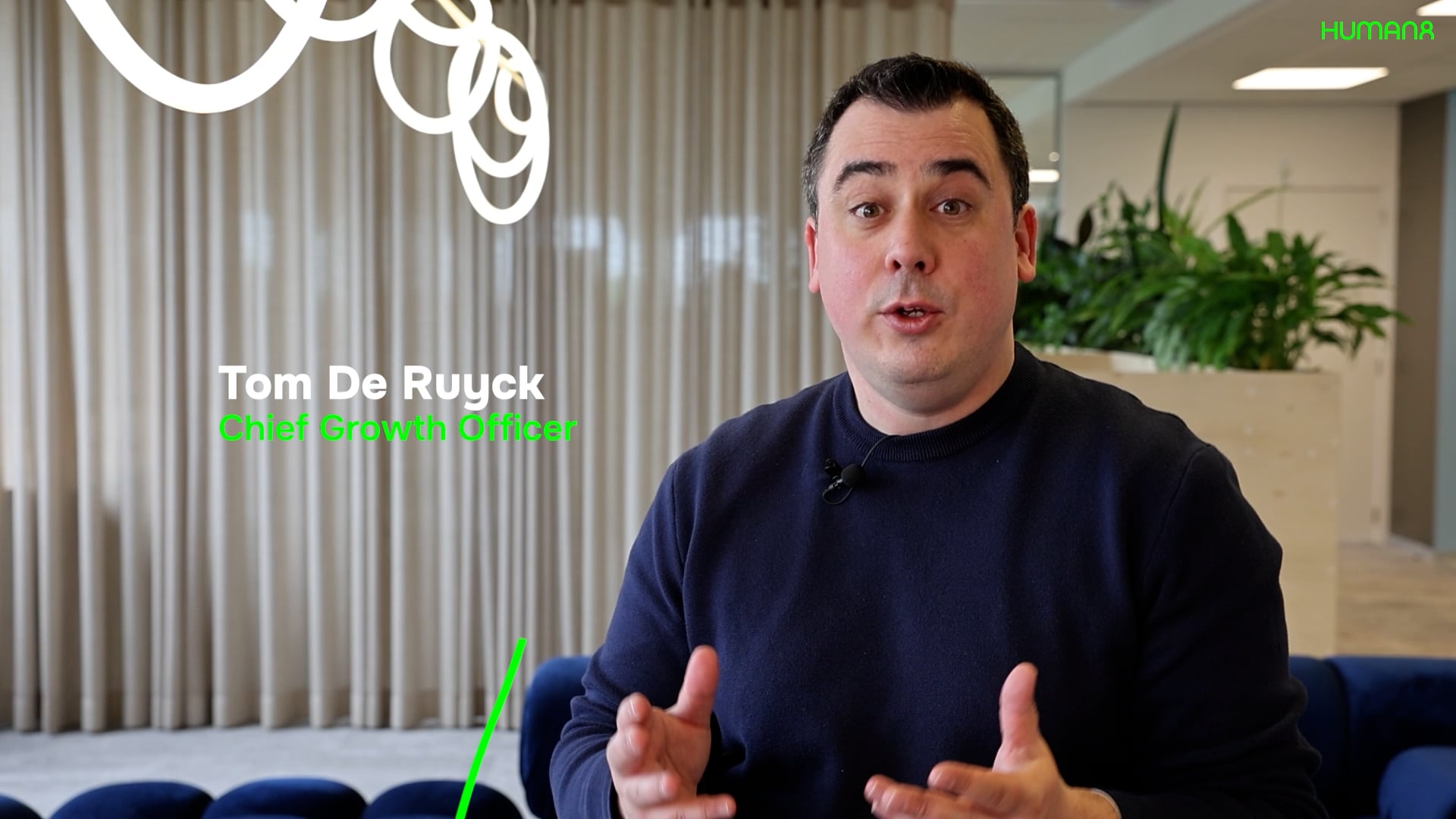
Our Chief Growth Officer, Tom De Ruyck explains creative power:
FAQS
1. What three dimensions make up the human spark?
The three dimensions that make up the human spark are community, culture and consumer closeness. Together, they fuel creativity and connection in ways that resonate with real people.
2. Why is creativity becoming more important in the age of AI?
As AI makes it easier to produce content at scale, brands face increasing sameness. Creativity is what creates distinction, helping brands develop ideas, experiences and campaigns that feel original, emotionally resonant and culturally relevant.
3. Is AI replacing human creativity?
No. The most effective creativity comes from combining AI capability with human insight, cultural understanding and imagination. AI can accelerate ideation and uncover new possibilities, but humans provide the context, empathy and judgement needed to create meaningful ideas.
4. What is Hyper blanding?
Hyper blanding describes the growing sense of global sameness driven by the rapid spread of trends, aesthetics and ideas online. As content and styles are copied and repeated faster than ever, brands risk blending into the mainstream rather than standing out.
Get in touch
Let’s connect!