The human spark: how consumer closeness turns insight into impact
Why consumer closeness is the missing link in modern marketing decisions.
Tom De Ruyck
22 May 2026
4 min read
As marketers, we’ve never had more data, tools or AI-driven insight at our fingertips, yet many decisions still miss the mark. The human spark helps close that gap. As its third dimension, consumer closeness connects human insight and cultural fluency to real-world experience, turning understanding into action and helping marketers make faster, sharper and more confident decisions.
The missing link between understanding and action
Across the human spark blog series, we’ve explored how communities reveal the human insight that sits beneath behaviour and how cultural fluency helps brands make sense of the world around them – the shifts, the tensions and signals shaping people’s lives. But there’s still something missing between understanding and action.
Brands can build a strong understanding of people – their behaviours, motivations and context, yet without genuine emotional connection, that understanding can still feel distant and disconnected.
Consumer closeness helps to bridge that gap. As the third dimension of the human spark, it’s what turns insight into something marketers can actually work with. Not by adding more data. But by removing distance.
It’s about moving beyond knowing to experiencing, getting closer to the realities, emotions and frictions that shape people’s lives. Through that closeness, brands build empathy. Not as an abstract ideal, but as a deeper understanding of what people are feeling, needing and navigating in everyday life. Because while insight informs decisions, empathy often determines whether those decisions translate into meaningful action.
The empathy gap in modern marketing
Brands today have more data at their fingertips than ever before. With advanced tools, platforms and AI, it’s easier than ever to track behaviour, spot patterns and generate insight at scale. But access doesn’t automatically create understanding.
As organisations become more data-driven, there’s a risk that connection gets lost along the way. Many marketers are fluent in dashboards and metrics but spend less time with the people those numbers represent. It’s like reading the scoreboard without ever stepping onto the pitch.
At the same time, the way we work has changed. Digital platforms, remote collaboration and AI-enabled processes have added more layers between brands and the everyday realities they are trying to understand. Efficiency has improved, but proximity has reduced.
And that creates a subtle but important tension: the better we become at measuring people, the easier it becomes to lose sight of them.
This is where insight often stalls. Data brings clarity, scale and direction, but on its own it doesn’t always create momentum. Even the strongest findings can feel distant when they’re separated from the lived experiences behind them. And that’s why consumer closeness matters.
It brings marketers back into contact with reality through direct interaction, shared experiences and continuous engagement with the people they’re designing for. And when that proximity is restored, insight changes. It becomes more immediate. More human. And far easier to act on.
Closeness doesn’t replace data. It gives weight, turning understanding into decisions and decisions into meaningful action.
What happens when brands lose consumer closeness?
Bumble’s 2024 campaign around celibacy is a reminder of what happens when brands lose touch with the emotional reality behind behaviour. As part of its relaunch, Bumble ran ads with lines like “You know full well a vow of celibacy is not the answer” and “Thou shalt not give up on dating and become a nun.” The brand wanted to speak to the exhaustion surrounding modern dating, but instead it landed like a brand talking at people, not with them. The nuance got lost. What should have felt relatable ended up feeling reductive.
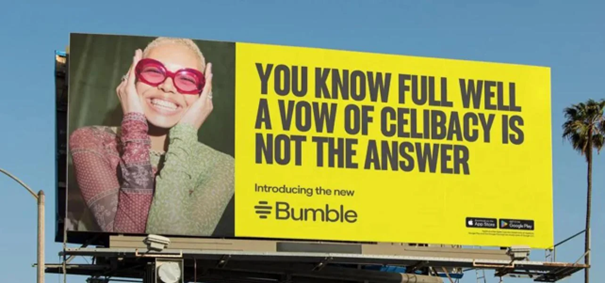
Because dating isn’t just a numbers game of swipes, matches and engagement metrics. Its emotional territory shaped by vulnerability, burnout, safety and self-worth. Bumble saw the symptoms but missed the feeling underneath it. And that’s what happens when marketers rely too heavily on assumption instead of closeness. The further brands drift from lived experience, the easier it becomes to flatten complexity into neat messaging that looks right on paper but feels wrong in real life.
Closeness works when it becomes part of the business
This is exactly why consumer closeness can’t be treated as a one-off workshop or a quarterly insight presentation. The brands getting it right are building closeness into the way decisions are made day to day. They’re creating continuous connection with the people behind the data, not just occasional exposure to them.
L’Oréal’s BeautyTalks programme is a strong example. It connects employees with consumers, healthcare professionals and hairdressers across multiple markets, creating opportunities for direct interaction and shared understanding. Since launching in 2021, the programme has engaged over 4,000 stakeholders across 30 entities in 29 countries. It has also received strong feedback from participants, reflecting the value of these interactions. As Sandrine Morel, CMI Director at L’Oréal Global Consumer Insights explains, “BeautyTalks brings us closer to markets and drives consumer centricity across L’Oréal.”
Programmes like this help build what many organisations refer to as “empathy muscles”, strengthening the ability to connect insight with real human experience.
The human spark: where understanding becomes action
Human insight uncovers what sits beneath behaviour; the tensions, motivations and dynamics that don’t always surface. Cultural fluency provides the wider lens, helping brands understand what’s shifting and why it matters. Consumer closeness brings both into the real world, turning understanding into something tangible, felt and ready to act on.
Together, these three dimensions form the human spark. Not just a way of understanding people, but a way of working. One that connects depth, context and empathy. Insight alone doesn’t create impact, it’s what you do with it that counts and the brands that move with confidence are the ones that stay close enough to feel what matters, not just measure it.
As marketing continues to evolve, the challenge isn’t choosing between technology and human understanding, it’s bringing them together in the right way. The brands that will stand apart are those that combine the scale of AI with the depth of community, the perspective of cultures and the immediacy of consumer closeness. That’s what turns insight into action. And that’s what helps brands cut through a sea of sameness and stay relevant in a world that refuses to stand still.
FAQS
1. What three dimensions make up the Human spark?
2. What is consumer closeness and why does it matter for brands?
Consumer closeness is the practice of engaging directly with people to understand their experiences, emotions and realities. It helps brands turn human and cultural insights into actionable strategies that resonate.
3. Why does consumer closeness matter more in an AI-driven world?
As AI accelerates how quickly marketers can generate insight and produce content, there’s a growing risk of becoming disconnected from the people behind the data. Consumer closeness helps bridge that gap, ensuring decisions stay grounded in lived experience, emotional context and cultural reality, not just patterns and outputs.
4. How does consumer closeness improve marketing decisions?
When marketers stay closer to the people they are designing for, assumptions are challenged earlier, ideas become more relevant and decisions are made with greater confidence. Consumer closeness helps teams move beyond surface-level behaviour to understand the tensions, motivations and emotions driving action.
5. How can brands build consumer closeness within their organisation?
Brands can cultivate closeness by creating opportunities for employees to interact directly with consumers, such as immersive experiences, workshops, online sessions, or programs like L’Oréal’s BeautyTalks which strengthen empathy and understanding across teams.
Get in touch
Let’s connect!