Consumer empathy: from individual skill to organisational capability
Consumer empathy is no longer a soft skill. It’s a capability that can be built, scaled and embedded into how organisations think and act.

Sarah Van Oerle
18 June 2026
7 min read
Consumer empathy is an organisational capability that can be built, scaled and embedded. From building individual skills, to sharing insights across teams, deepening understanding through immersive experiences and integrating empathy into systems and decision-making. This enables organisations to make decisions grounded in real consumer understanding.
In a world overflowing with data, consumer empathy has become one of the most valuable competitive advantages a business can have. But it’s also under pressure. Teams are expected to move faster. Decisions need to be made at speed. And AI is transforming how information is gathered, analysed and shared. At the same time, consumers are changing faster than ever, influenced by shifting cultures, technologies and expectations. Staying close to people – and building genuine consumer empathy – has never been more important. And more challenging.
But the good news is that empathy is not static. According to social neuroscientist Professor Jamil Zaki, empathy is not a trait that some people possess and others don’t. It’s a skill. Something we can learn, strengthen and practice.
The same is true for organisations. The brands that consistently stay connected to consumers don’t do so by chance. They don’t rely on a handful of naturally empathetic individuals. And they certainly don’t treat empathy as a one-off initiative. Instead, they build it deliberately layer by layer, until consumer empathy becomes embedded in how people think, collaborate and make decisions every day.
So the question is no longer why consumer empathy matters. It is: how does it take root inside an organisation?
Consumer empathy starts with people
Before empathy can be scaled, it needs to exist at an individual level. That sounds obvious. Yet many organisations have invested heavily in data literacy while overlooking something equally important: empathy literacy. Teams know how to analyse data, identify patterns, interpret dashboards and track performance metrics. But understanding people requires a different skill set altogether. It requires curiosity, observation, listening. And the ability to immerse in the lived realities of people.
Because consumers are not simply data points or segments. They are human beings navigating complex lives, shaped by emotions, contexts, aspirations and constraints. Developing consumer empathy therefore requires more than access to information. It requires people to recognise the human stories behind the data and translate them into meaningful understanding.
That was the challenge Reckitt set out to address. The organisation wanted to strengthen consumer centricity across its teams and help marketers move beyond demographics, dashboards and category conventions. Together, we developed a global hybrid learning programme combining online and in-person sessions. Participants explored how consumer needs are evolving, challenged their assumptions and immersed themselves in real consumer realities through stories, examples and business cases drawn from Reckitt’s own context. The programme went beyond teaching frameworks and methodologies. Teams worked on real business challenges, applying consumer understanding directly to their own brands and decisions. More than 250 marketers and consumer insights professionals took part. Over time, something began to shift. Consumer insights became less abstract and more human. Teams became better at recognising the stories behind the data and more confident in translating understanding into action. Empathy does not emerge automatically. It needs to be practised, applied and experienced.
Empathy grows when it spreads through the organisation
Building consumer empathy at an individual level is only the starting point. Because empathy only creates impact when it spreads.
In many organisations, valuable consumer understanding remains trapped. Captured in research reports, stored in insight platforms and discussed within small groups of specialists. When that happens, insight stays siloed, never fully reaching the people who could act on it. And it is empathy that unlocks it.
The organisations that embed empathy most successfully do something different. They make understanding travel. Not through more presentations or more information, but through stronger human connection. They transform consumer insights into stories that people remember, experiences that people can participate in and conversations that people want to have. Because facts inform, but stories move people. And when people feel connected to consumers, they are far more likely to act on what they have learned.
A clear illustration of this comes from Pernod Ricard in China. The team had developed a rich study exploring 19 consumption moments and 11 consumer segments. But they faced a challenge: how do you make a rich set of insights resonate beyond the research team?
Instead of presenting the findings through traditional reports or presentations, we transformed them into a live, reality show-inspired experience. Drawing inspiration from China’s booming live-streaming culture, real consumers brought key consumption moments to life, while stakeholders could interact, ask questions and engage with the stories in real time. More than 150 stakeholders joined the experience. By turning consumer insights into something people could see, feel and participate in, we sparked deeper engagement, stronger internal conversations and greater buy-in for a consumer-centric way of thinking.
Empathy deepens through experience
Reports and well-crafted stories can bring you close to consumers. But they cannot fully replicate the consumer reality. Consumer empathy deepens when teams step into that world themselves. When they see, hear and experience it first-hand. This is where consumer understanding shifts from abstract to embodied. It’s about immersing in the lived reality and context of consumers.
A strong example comes from Samsung Home Electronics in the US. To bring fresh shopper insights into their retail strategy, we invited cross-functional teams on an immersive retail safari in New York City, followed by a digital exploration of the same brands online. Teams were briefed on key business challenges and then stepped into the experience as shoppers themselves, visiting multiple retail environments across categories. Alongside this, a digital safari helped them explore how physical and digital retail experiences connect and diverge.
More than 250 observations were collected across physical and digital touchpoints, forming the basis for a collaborative workshop. From there, teams mapped insights, identified friction points and explored opportunities for improvement. The outcome was not just better understanding, but momentum. Over 80 ideas were generated and brought forward in a “Shark Tank”-style pitch, translating immersion directly into action.
Empathy, in this case, didn’t stay conceptual. It became energised thinking. And importantly, it became shared. Because when people connect directly with lived experiences, they don’t just understand differently. They think differently.
Consumer empathy shapes everyday decisions
When empathy is consistently experienced across an organisation, something fundamental shifts. It stops being dependent on individual effort or isolated initiatives. And it starts to become embedded in how the organisation operates. At this stage, empathy is no longer something teams “do” from time to time. It becomes something they build into processes, rituals and decision-making structures.
This is exactly what we see at L’Oréal. With a long-standing heritage in consumer centricity, the organisation recognised the need to move beyond understanding consumers towards something deeper: sustained consumer empathy at scale. In response to an increasingly dynamic beauty landscape shaped by cultural shifts, digital behaviour and evolving expectations, L’Oréal collaborated with us to introduce Beauty Talks. This is a global consumer connect programme designed to keep teams continuously close to real consumer perspectives. The aim was not a one-off immersion, but an ongoing system of engagement.
Through a combination of online and offline formats, employees across markets are brought into direct contact with consumers, allowing them to continuously sense, listen and learn. What makes the programme powerful was not only the scale, but the consistency.
Over time, these repeated interactions are shaping how teams approach their work. Consumer perspectives become a reference point in discussions, planning and decision-making.
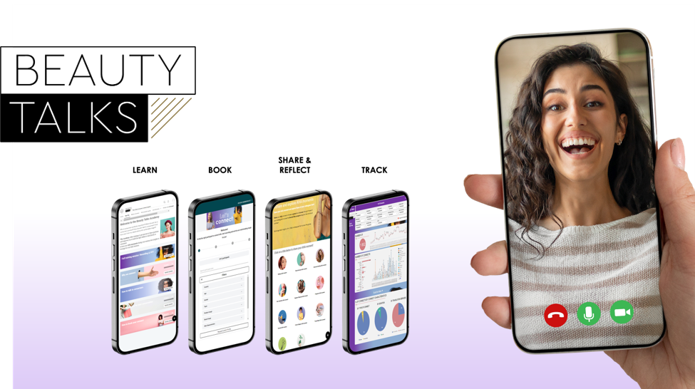
The impact is clearly reflected internally. With a score of 8.5/10, coming from the most recent Beauty Talks impact survey, we can say that L’Oréal teams across the globe recognise consumer empathy as instrumental to brand growth. Today empathy is less of an initiative and more of a habit. It’s embedded in how L’Oréal thinks, collaborates and moves. Because when empathy is reinforced through systems rather than isolated efforts, it stops fading after each project or workshop. It accumulates. And over time, it becomes part of the organisation’s DNA. At that point, empathy is no longer something you need to activate. It is simply how work gets done.
From skill to system
Empathy doesn’t scale by accident. It starts with individuals learning to listen and understand more deeply. It grows when that understanding travels across teams and geographies. It deepens through direct experience of the lives people live. And it matures when empathy is no longer dependent on initiatives, but embedded in the systems and rituals that shape everyday decisions.
Today it’s no longer about having the most consumer insight, but staying closest to human reality, consistently and at scale.
Because to move people with your brand, you first have to be moved by them.
1. What is consumer empathy in business?
Consumer empathy is the ability of an organisation to understand not just what consumers do, but why they do it. This by recognising their emotions, contexts and lived experiences.
2. Why is consumer empathy important for brands?
Consumer empathy is important because it helps organisations move beyond data and truly understand people’s motivations, emotions and real-life contexts. This leads to more relevant strategies, stronger connections and better business outcomes.
3. Can empathy be developed in organisations?
Yes. Research from social neuroscientist Professor Jamil Zaki shows empathy is a skill that can be learned and strengthened, both at individual and organisational level.
4. How do organisations build consumer empathy?
They build it through capability development, sharing insights across teams, immersive experiences with consumers and embedding empathy into systems and decision-making.
5. What is the difference between consumer insight and consumer empathy?
Consumer insight is understanding patterns in data. Consumer empathy goes further by connecting those insights to real human experiences, emotions and contexts.
6. How does immersion help build empathy?
Immersion allows teams to experience consumer reality directly, helping them move beyond abstract understanding to embodied, lived perspective.