Blog
AI supercharges research
Four learnings on applying AI to supercharge data and insights.

Annelies Verhaeghe
26 July 2023
4 min read
This blog explores four learnings from our 2023 experiments with AI in market research, from research set-up and moderation to data analysis and longitudinal insights.
Since the introduction of ChatGPT in November 2022, generative AI is taking over the world (of insights) by storm.
It’s the most talked-about topic among insight professionals with 93% of researchers seeing it as an opportunity for the industry. Esomar has set up an AI taskforce, MRS has written a white paper on AI regulation and the AMA launched AI archives.
But what does this mean for you as a brand or insight professional? Will primary research still be needed or do we move to a world where AI systems will predict results without any research at all?
Exploring the future of research through AI experiments
We developed a personal research assistant – using ChatGPT as underlying algorithm – to safely experiment with generative AI in our day-to-day jobs. Here’s what we’ve learned.
1. AI lifts research to a higher level
From extracting insights, translating and summarising research output in any language to creating surveys and topic guides, AI will help us become more effective in our everyday jobs.
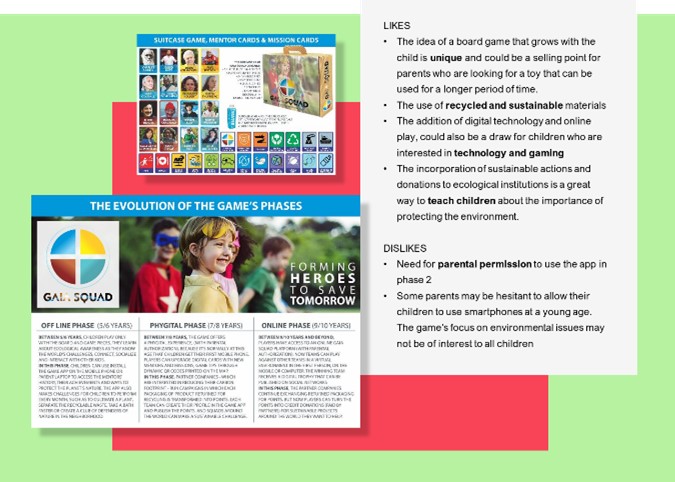
At the start of a research project, these systems can also help us generate hypotheses, lifting the set-up and kick-off to a higher level. For example, we have used AI to predict the outcome of a concept validation piece on a new game. It retrieved a list of potential likes and dislikes that we took on board as hypotheses for this study.
2. AI needs human eyes
To make AI work, it’s essential to feed the system with the right contextual information. Using AI effectively means we need to master the art of asking the right questions, fully understanding the client need and prompting the system in the right way.
We found that AI moderated responses brilliantly in about 65% of cases. But in 32% of cases, it would give a prompt that was not relevant within the context of the research.
For example, when a respondent answered “no time” to the question “Why don’t you watch Netflix?”, the chatbot probed further with “What other forms of entertainment do you typically enjoy when you have free time?”
The question as such is not completely off, but it is not relevant in a study that focuses on the brand Netflix and not on entertainment in general.
3. AI needs human data
AI tools are very useful in the context of primary data gathering and analysis.
We set up an A/B test where we asked our research assistant to use the knowledge of ChatGPT to find new insights on what well-being means for Gen Z in the Greater Hong Kong Area.
We also instructed the assistant to use its interpretative and analytical capabilities on community data that we gathered on this topic.
We found that while the available knowledge of ChatGPT gave us a nice theoretical framework on well-being, the community data added an emotional, human layer that was far more actionable.
The community data also revealed additional insights that were not picked up by our AI assistant.
4. AI helps to unlock the value of longitudinal data
Our experiments show that, when used in the right way, generative AI provides multiple opportunities to supercharge research.
From project set-up to moderation and analysis, AI can play a significant role in each phase of a research project.
But its true value doesn’t lie in the tool itself. It lies in the data it’s used on.
Over time, AI systems can become real knowledge and insight assistants. They can easily curate and share insights across the many research projects you run each year.
Just think about the data from ongoing research communities that have been running over multiple years.
With one great prompt, you can get an answer to questions such as: “How has the perception towards sustainability changed for our three main target groups in five key markets?”
To be able to extract such meta-learnings, AI tools need to be fed with high-quality data. All underlying dimensions, such as correct sampling, respondent quality and asking the right questions, need to be covered.
It’s about feeding AI systems with high-quality longitudinal data to get to more relevant, interesting and valuable output.
What we learned from our AI experiments
- AI can support researchers across multiple stages of a project, from set-up to analysis.
- AI still needs people to provide context, judgement and quality control.
- Primary research adds an emotional and human layer that generic AI knowledge cannot provide.
- Longitudinal research data can unlock deeper insights when combined with AI.
- The quality of the data ultimately determines the quality of the output.
Machines need humans and humans need machines
AI tools supercharge human power, helping insight professionals do their jobs more efficiently.
But we need to be careful in how we use them. If the basis is not covered – high-quality longitudinal data and skilled human researchers – AI tools could potentially do more harm than good in guiding your business decisions.
More experimentation is needed to fully grasp how to leverage AI as effectively as possible.
FAQs
1. Which market research tasks can AI automate?
AI can help with tasks such as summarising and translating research, creating surveys and discussion guides, generating hypotheses, moderating responses and analysing data. Human review remains essential to make sure outputs are relevant to the research context.
2. Does AI replace primary market research?
AI can work with existing knowledge and data, but our experiments show the value of combining AI capabilities with high-quality primary research data and human expertise.
3. How can AI help analyse research data?
AI tools can help identify patterns, summarise responses and connect findings across research projects. Their usefulness depends heavily on the quality and context of the underlying data.
4. Why does AI need high-quality research data?
AI outputs are only as useful as the information they are based on. Strong sampling, respondent quality, relevant questions and well-structured longitudinal data all contribute to more meaningful insights.