Blog
Your community: the Swiss Army Knife of research
How communities combine so called research paradoxes in one hybrid philosophy.
Angie Deceuninck
07 June 2023
4 min read
Insight communities combine different research methods in one flexible approach, helping brands bring together qualitative and quantitative research, live and asynchronous activities, and what people say and do.
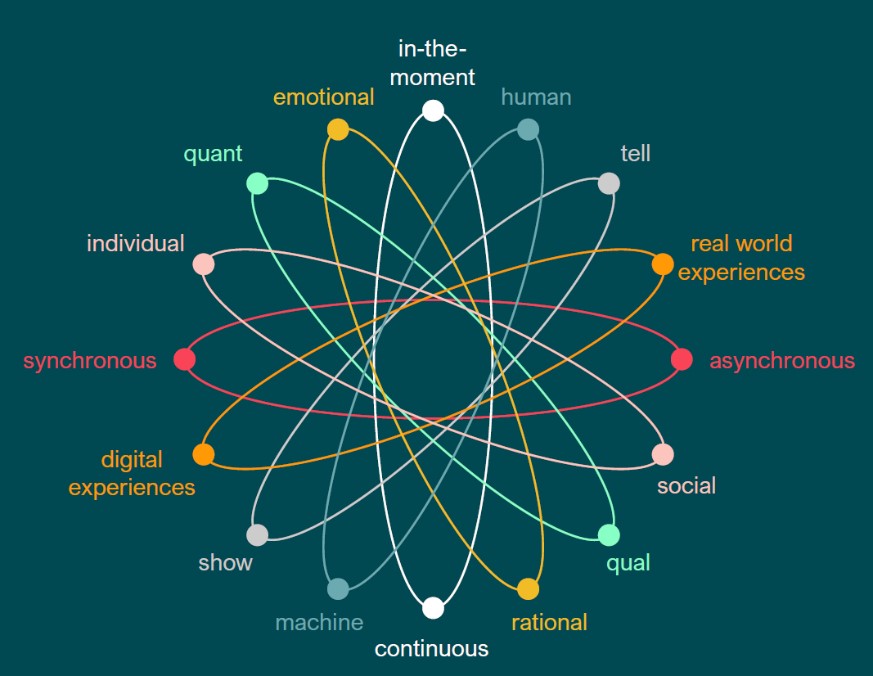
How often do research teams have to choose between two approaches? Are you a ‘qual’ or ‘quant’ person? Should you use an asynchronous or synchronous approach? Focus on individual or social techniques? Capture emotions or facts? Our insight communities challenge these common research trade-offs. What if you didn’t have to choose?
We’ve evolved communities from an online qualitative technique into an all-round research hub. Instead of thinking in terms of ‘OR’, we embrace an ‘AND’ philosophy – combining different approaches to answer different research questions within the same community.
Here are five ways we bring seemingly opposing approaches together.
Quant AND qual
Insight communities can combine the depth of qualitative research with the scale and validation of quantitative methods.
Community discussions and activities help us understand people’s needs, experiences and behaviours in context. Surveys can then help validate findings across a wider group of members.
Take Samsung, for example. To help the brand strengthen its position in the Philippine appliance market, we first explored people’s experiences through online discussions and video diaries. We then used quantitative research to validate the findings. This helped Samsung segment its customers and identify key category drivers, purchase influencers, as well as brand strengths, weaknesses and opportunities.
The takeaway: use qualitative research to understand the ‘why’ and quantitative research to validate what you find.
Synchronous AND asynchronous
Insight communities can combine live activities with research that happens in people’s own time. Synchronous activities, such as video calls or live chats, allow moderators to go deeper immediately. They can pick up on spontaneous reactions, ask follow-up questions and explore feedback in the moment. Asynchronous activities, such as forum discussions, diaries and other community activities, give members more time and flexibility to reflect. They can share experiences, pictures and short videos when it suits them.
For a global pharma company, we ran a community with people living with MS. Asynchronous discussions helped us immerse ourselves in members’ everyday lives. They could share experiences at a moment that felt relevant – for example, reporting back on their latest interaction with a healthcare provider.
Synchronous discussions then allowed us to get direct feedback on new solutions and explore members’ spontaneous reactions in more depth.
The takeaway: combine real-time interaction with flexible activities to capture both spontaneous reactions and considered reflection.
Rational AND emotional
People don’t always make decisions rationally. That’s why understanding behaviour requires more than simply asking people what they think.
Insight communities allow us to combine approaches that tap into rational thinking (system-2 thinking) and emotions (system-1 thinking). Members can answer questions, but they can also take part in creative and projective activities that reveal feelings, associations and motivations that might be harder to express directly.
For example:
- “Write a letter to your future self.”
- “Look through the eyes of your pet and describe a day in its life.”
- “Let’s not use day cream for a week. How does that make you feel?”
These activities help us move beyond what people say and explore what sits beneath their answers.
The takeaway: combine rational questions with creative techniques to uncover both what people think and how they feel.
Human AND machine
Technology can make research more efficient, while people bring the empathy and judgement needed to understand what sits behind the data.
In a community for Nestlé Australia, we worked with a chatbot to support moderation. The bot handled more repetitive activities, such as diary exercises and engagement prompts, while the human moderator could focus on higher-value tasks.
Community members accepted the chatbot, but the real power came from combining technology with human expertise. The technology helped the team work faster and more efficiently, while the moderator could focus on digging deeper, understanding emotions and uncovering richer qualitative insights.
The takeaway: let technology handle repetitive tasks so researchers can spend more time doing what people do best – understanding people.
Tell AND show
People don’t always accurately recall their habits and routines. That’s why we don’t only ask members to tell us about their experiences. We also give them opportunities to show us what they actually do.
Pictures, videos and other forms of visual feedback can bring everyday behaviours to life and reveal details that might otherwise be forgotten or overlooked. Because sometimes there’s nothing more revealing than a picture of an overflowing laundry basket.
But showing is only part of the picture. Asking questions gives us the context behind what we see – helping us understand not just what people do, but why.
The takeaway: combine what people tell you with what they show you to build a richer picture of everyday behaviour.
What are insight communities used for?
Insight communities can support a wide range of research needs, from exploring people’s experiences and understanding behaviours to developing ideas, testing concepts and gathering feedback.
Because different research methods can be combined within the same community, they give research teams the flexibility to adapt their approach as the questions evolve.
An insight community can help you:
- Explore needs, behaviours and motivations
- Generate and develop ideas
- Test concepts and propositions
- Gather feedback over time
- Combine qualitative and quantitative research
- Build a deeper understanding of customers
Your Swiss Army Knife of research
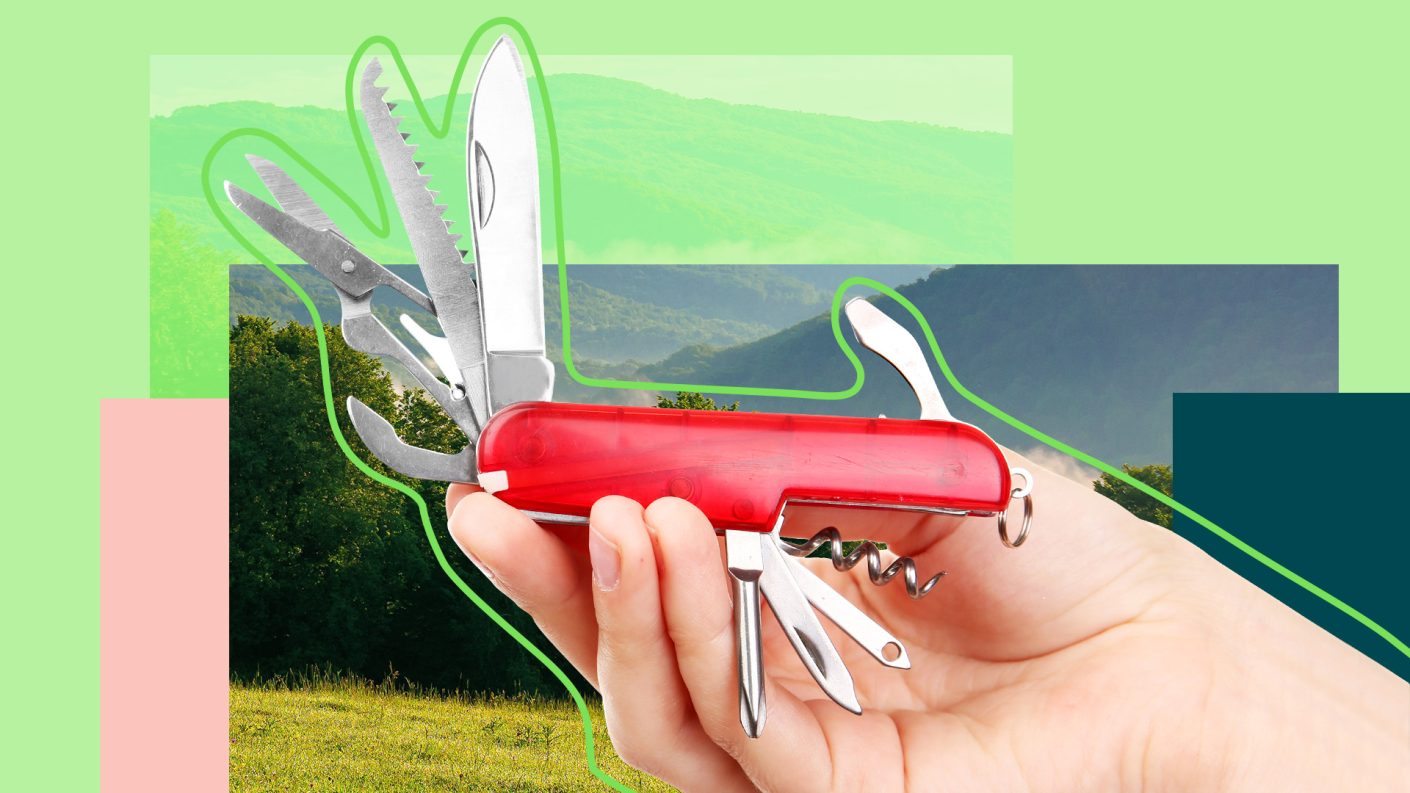
Your insight community is your Swiss Army Knife of research. Just like a pocket-sized Swiss Army Knife can help you saw wood on a camping trip, fix your bike or open a bottle at a picnic, an insight community can adapt to different research needs.
You don’t always have to choose between qual and quant, live and asynchronous or tell and show. Sometimes, the best research approach is bringing them together.