The competitive advantage hiding in plain sight: consumer empathy
Consumer empathy is a business capability that helps organisations make better decisions in a world of constant change.

Sarah Van Oerle
16 July 2026
7 min read
Consumer empathy improves decision-making across organisations. By staying close to consumers’ changing realities, brands are better able to anticipate market shifts, create products and experiences people truly value and build stronger, longer-lasting customer relationships.
Empathy has long been labelled a soft skill. Something important, but difficult to measure. Something that sits in the background of “good marketing” or “strong leadership”, rather than in the centre of business performance. But that framing no longer holds.
Because in practice, the presence – or absence – of consumer empathy shows up very clearly in business outcomes. In products that don’t land. In campaigns that miss the cultural moment. In customers who quietly disengage long before the data flags a problem.
The irony is that most organisations already have more consumer data than ever before. Yet better information alone hasn’t closed the gap between knowing people and truly understanding them. And that’s where empathy becomes more than a mindset. It becomes a business capability with very real consequences for how decisions are made and how well those decisions land in the real world.
Consumer empathy helps organisations anticipate change
People’s lives don’t stand still. Consumer expectations evolve, cultures shift and technologies reshape everyday life. Behaviours that felt predictable a few years ago can quickly become outdated.
The challenge isn’t that organisations fail to collect enough data about these changes. It’s that they don’t always recognise what those changes mean in people’s lives. Take Gucci.
For years, the brand represented status and aspiration in China. Then something started to shift. Younger consumers began embracing pingti: the idea that quality and personal expression matter more than visible luxury. Status was no longer about showing what you could afford. It was about showing who you are. But Gucci continued building on the symbols that had made it successful for years: strong branding, iconic logos and clear status signalling. And gradually, the brand drifted away from a new generation of consumers.

Consumer empathy helps organisations spot these kinds of shifts earlier. It keeps them connected to changing realities, rather than relying on assumptions built in the past. That’s why more brands are moving from one-off research towards continuous consumer sensing. Instead of relying on occasional snapshots, they create an ongoing dialogue with the people they serve, allowing them to sense how behaviours, expectations and cultural values evolve over time.
Staying relevant is thus not about building bigger dashboards. It’s about installing an ongoing connection with consumers to sense change while it’s still happening.
Better products start with consumer empathy
Understanding people changes what organisations create. Think about products and services, but also retail experiences, communication and customer journeys. Because when teams move beyond assumptions and experience the world through consumers’ eyes, different opportunities become visible.
This is exactly what happened at Samsung Home Electronics. Rather than analysing shopper behaviour from reports alone, we helped cross-functional teams step into retail environments across New York City. They observed how people navigated stores, where they hesitated, what frustrated them and what delighted them. More than 250 observations eventually translated into over 80 new ideas for improving the retail experience. The breakthrough wasn’t a new dataset. It was creating consumer closeness: stepping into the shoes of consumers and experiencing the retail journey through their eyes. By experiencing the retail journey themselves, teams recognised friction points that would never have appeared in a dashboard. Consumer understanding became tangible. And better understanding led to better decisions.
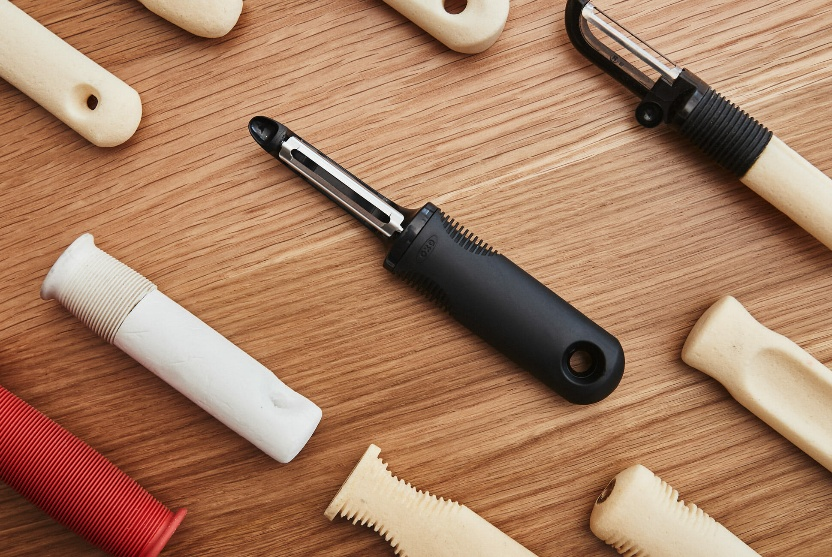
A similar principle can be seen at OXO Good Grips. By observing how people with arthritis struggled with everyday kitchen tools, the brand realised that designing for specific limitations often leads to better usability for everyone. They made their handles softer and more intuitive, usability replaced aesthetics as the starting point and small frustrations in daily routines were turned into design opportunities. What looked like minor behaviours revealed meaningful unmet needs.
This principle reaches far beyond retail or product design. Whether organisations are designing products, developing services, improving customer experiences or launching new innovations, the quality of those decisions depends on how closely they understand the people they are creating for.
That doesn’t mean that consumer empathy replaces consumer insight. But it gives insights the human context needed to turn information into meaningful action.
Consumer empathy unlocks more creative thinking
Consumer empathy doesn’t just improve decision-making. It also changes the quality of the ideas organisations generate.
When teams spend time with consumers rather than relying solely on reports or dashboards, they encounter unexpected behaviours, frustrations and motivations that rarely emerge from data alone. These moments challenge assumptions and reveal opportunities that might otherwise remain invisible. Instead of confirming what teams already believe, they often encourage entirely new ways of looking at a problem.
This is why organisations that stay close to consumers throughout the innovation process tend to create stronger conditions for creativity. A deeper understanding of people’s experiences helps teams move beyond incremental improvements and identify opportunities that are both original and relevant. The goal is not creativity for creativity’s sake, but ideas that genuinely improve people’s lives.
We see this regularly in co-creation workshops. Teams often enter convinced they understand the challenge they’re trying to solve. Yet after spending just an hour with consumers, priorities shift, new questions emerge and different ideas begin to take shape. What changes is not the team’s creative ability, but the perspective they’re bringing into the room.
In that sense, consumer empathy doesn’t constrain creativity. It gives it direction. By grounding imagination in real human experiences, organisations are more likely to create solutions that are distinctive, meaningful and valued by the people they serve.
Loyalty begins with feeling understood
People don’t build relationships with brands because they have the most extensive dashboards. They build relationships with brands that make them feel understood. That understanding influences everything. From how brands communicate, to the experiences they design, to the problems they choose to solve. Even the moments when they decide to listen rather than speak.
A recent example can be seen in Peanut. The platform, built for women navigating fertility, pregnancy and motherhood, is grounded in a simple but powerful truth: these experiences are deeply emotional, often isolating and not solved by information alone. What matters most is feeling seen, heard and reassured by others who truly understand. That insight shapes the entire brand. From prioritising peer-to-peer conversations over expert-led content, to creating a space where women can openly share what they’re going through, Peanut’s value comes from connection, not control. Even its “Ask Peanut” feature reflects that philosophy. Rather than positioning AI as the answer, it extends the voices of the community. By combining lived experiences shared by real women with AI support, Peanut is trying to preserve a sense of human reassurance at scale.

Consumers don’t separate marketing from service, product design or customer support. They experience one brand. Every interaction either reinforces the feeling that “this brand understands me” or slowly erodes it. Empathy therefore becomes much more than a communications capability. It becomes the foundation for stronger relationships, deeper loyalty and long-term brand relevance.
Better decisions don’t happen by accident
Of course, consumer empathy doesn’t emerge on its own. It’s not about simply conducting more research. It’s about deliberately building empathy into how people learn, collaborate and make decisions. As such consumer empathy becomes part of daily practice, not a one-off activity.
That means creating repeated opportunities for teams to engage directly with consumers, not just through reports or presentations, but through real interaction with the realities people live in. It also means sharing that understanding across functions, so insights don’t stay locked within research teams but actively shape decisions in product development, marketing, customer experience and beyond. And it requires continuity: staying connected to evolving behaviours and expectations, rather than relying on static snapshots.
Because in the end, consumer empathy is not just a mindset. It’s a capability that raises the quality of decisions across the entire business.
From understanding people to creating value
For years, organisations competed on information. Today, information is abundant. The real advantage no longer comes from knowing more about consumers than your competitors. It comes from understanding them more deeply.
Because when organisations build consumer closeness and stay connected to people’s realities, they anticipate change earlier, unlock more creative thinking, create products and experiences that fit more naturally into people’s lives and build brands that remain relevant long after trends have passed.
Consumer empathy is therefore not a soft skill. It’s a business capability. One that quietly improves thousands of decisions across an organisation, every single day. Because to move people with your brand, you first have to be moved by them.
FAQS
1. What is consumer empathy in business?
Consumer empathy is the ability of an organisation to understand not just what consumers do, but why they do it. This by recognising their emotions, contexts and lived experiences.
2. Why is consumer empathy important?
Consumer empathy helps organisations make better decisions, create more relevant innovations and stay closely connected to changing consumer needs and behaviours.
3. How does consumer empathy improve decision-making?
It provides the human context behind data, allowing teams to interpret consumer behaviour more accurately and make more relevant, effective decisions.
4. Is consumer empathy a soft skill?
While often described as a soft skill, consumer empathy is increasingly recognised as a business capability that directly impacts performance, innovation and customer loyalty.
5. How do organisations build consumer empathy?
They build consumer empathy by embedding direct consumer exposure into decision-making, creating cross-functional collaboration around insights, and maintaining continuous connection with evolving consumer behaviour.
6. What is the difference between consumer empathy and consumer insight?
Consumer insight is the information collected about consumers. Consumer empathy is the ability to understand the meaning behind that information in people’s real-world context.