Blog
Closing the creativity gap: fresh perspectives fuel fresh ideas
How diverse perspectives, creative talent and consumer involvement enhance your ideation efforts with ideas that spark.

Katia Pallini
26 September 2024
5 min read
In today’s competitive landscape, creativity isn’t just a bonus – it’s a necessity. Yet, many companies still operate like assembly lines, prioritising efficiency over innovative thinking. This tension is often called the creativity gap: the distance between the creativity a business needs and the ideas or creative capacity it can put to work. Consider Nokia’s approach in the early 2010s when it stuck to its tried-and-tested formula, only for competitors like Apple and Samsung to leap ahead with game-changing innovations. This illustrates the creativity gap – where the need for fresh ideas collides with limited internal resources. So, how can businesses bridge this gap? Let’s shed a light (bulb) on how you can get to ideas that spark.
Diversity trumps ability
The ‘diversity trumps ability’ theorem states that a varied group of problem solvers can outperform even the best individual experts. Take the online game Foldit, for example, where a diverse community of gamers managed to crack the structure of a retroviral enzyme in just three weeks – a task that had puzzled scientists for around 15 years. This breakthrough unlocked key insights into combating AIDS and is a testament to the power of diverse thinking in creative ideation.
In organisations, however, teams often form homogenous groups, with members sharing similar education, perspectives, and problem-solving techniques. While these individuals might excel in specific tasks, their lack of diversity limits creative thinking. Simply put, multiple heads aren’t better if they all think alike. This is also what happened with Balenciaga’s controversial photoshoot featuring children holding teddy bears in bondage gear. The internal team, used to the brand’s edgy image, failed to flag the problematic imagery, leading to public backlash.
The lesson here is clear: involving a truly diverse set of people when rallying around business challenges leads to better, more innovative solutions. As Montaigne once said, “The only thing we all have in common is that we are all quite different.” By bringing diverse voices into the fold, businesses can break free from narrow thinking and develop ideas that truly resonate.
Creatives are a rare breed
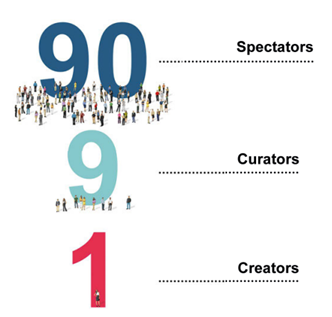
While installing diversity in your team is crucial, another challenge is that not everyone in your organisation has the skill to generate fresh ideas. Creatives, and those who ‘create’ are a rare breed. This is also visible in the media content sphere, where if one looks at people on any given social media page; 1% will actually create content (creators), another 9% will like, share or react to what is created (curators) and the remaining 90% will merely consume the creation (lurkers). This is also referred to as the 90-9-1 rule and originates from Bradly Horowitz, VP at Google who stipulated this after observing people’s behaviour on photo sharing website Flickr. Not everyone is wired to think outside the box. Yet in a world where creativity is a core differentiator, businesses must find ways to engage with that 1% of creators. According to the World Economic Forum’s Future of Jobs Survey 73% of organisations believe that creative thinking is a top skill when considering talent, showcasing that the skill is in high demand.
Consumers deserve a stake in what gets made
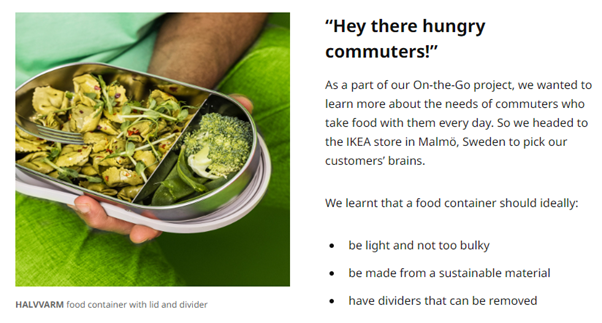
Marketers like to think they know their customers. Most don’t live like them. They build products and services they rarely use the way their customers do, which is why consumer perspectives belong inside the innovation process, not bolted on at the end. IKEA has built on this belief for years. Its Co-Create IKEA platform once invited fans to develop new products. Today the same thinking lives on in physical Co-Create Hubs, where customers, co-workers, partners and startups shape products and services together, and even in a Roblox store where players took on paid virtual jobs. The format has shifted from open idea portals to curated, ongoing communities, but the principle holds: the best ideas come from the people who live with the problem every day.
In fact, consumers increasingly expect to be involved in shaping the products they use. Rather than passively consuming, people now want opportunities to participate in the development of products that matter to them. Empowered by digital tools, consumers are becoming creators, shifting the task of innovation from manufacturers to users. This “democratization of innovation” also brings financial benefits, as co-created products are perceived as more closely aligned with consumer needs, offering higher quality, distinctive character, and greater consumer preference.
Creative crowdsourcing
With creativity in high demand, there’s thus an opportunity for brands to not solely relying on their in-house talent. Instead, brands can tap into creative crowdsourcing to access external creators who can provide innovative ideas and solutions to a brand’s challenge.
This approach allows brands to crowdsource a variety of ideas, from generating new product concepts that meet unique consumer needs to brainstorming communication strategies and optimising touchpoints. Nestlé’s KitKat, for instance, tapped into our eÿeka network for crowdsourced campaign ideas. This collaboration resulted in the viral Kätapult video, which exceeded sales targets in Australia, expanded across Europe, and even reached the U.S. market. Crowdsourcing enables brands to tap into a pool of creators with diverse skill sets and consumer insights that in-house teams might lack.
The benefits of crowdsourcing are clear. By involving consumers, companies ensure their innovations resonate with the broader public. Co-created ideas are thus inherently more relevant, making them easier for consumers to embrace. Creative crowdsourcing also offers the potential for breakthrough ideas that may not emerge from internal teams.
However, challenges exist. Crowdsourcing often involves individuals unfamiliar with a brand’s internal way of working, leading to ideas that may be too ambitious or impractical. Furthermore, internal resistance, such as the ‘not invented here’ syndrome, can hinder the successful adoption of externally sourced ideas if middle management fails to see their value. So while outside creatives may fuel your innovation pipeline with a wealth of fresh ideas and diverse perspectives. Bridging the empathy gap requires integrating these insights with the broader context provided by internal stakeholders. These insiders understand the business landscape and strategic goals, ensuring that creative ideas are both imaginative and feasible.
The true power thus lies in combining these approaches. Organisations can reduce the creativity gap by making creativity part of the everyday work process: give teams time, support, and freedom to explore ideas, invite diverse employees, consumers and external creators to contribute. Then combine those fresh perspectives with internal expertise to test, refine, and implement ideas that are both fresh and relevant.
FAQs
How can businesses improve creativity and generate better ideas?
Why are diverse perspectives important in ideation?
Diverse perspectives can help teams break away from homogeneous thinking and approach challenges in different ways. Bringing different voices, experiences and problem-solving approaches into ideation can lead to fresher and more innovative solutions.
What is creative crowdsourcing and how can it support innovation?
Want to know more?
Let’s connect