New global survey reveals critical gaps in understanding how quickly invasive meningococcal disease can become life-threatening
While most parents and young people recognise IMD as a serious illness, the findings highlight opportunities to improve awareness of its rapid progression, early recognition and prevention. 1
This global 2026 IMD Awareness survey was conducted as primary market research by Human8 on behalf of GSK.
An uncommon disease that can become life-threatening within hours
Invasive meningococcal disease (IMD) is a rare, life-threatening disease caused by Neisseria meningitidis that can progress rapidly.2 Although uncommon, IMD can affect anyone, with the highest incidence among infants and young children and a second peak among young people aged 15-24 years.3
Early symptoms can resemble those of other illnesses, making IMD difficult to recognise.4 The disease can become life-threatening within hours, making early recognition critical, while those who survive may still face significant consequences.5 Up to 1 in 5 survivors experience severe, life-changing complications, including hearing loss, neurological damage and limb loss, which can have lasting impacts on survivors, their families and caregivers.6
New insights into awareness, risk perception and prevention
A global survey, commissioned and funded by GSK, highlights important gaps in understanding how quickly IMD can progress and why prevention and early recognition matter.1
Insights were gathered from 6,003 respondents across six countries – Argentina, Australia, Brazil, France, Italy and Spain – including 3,005 parents of children aged 0-18 years and 2,998 young people aged 15-25 years. The survey explored IMD awareness, perceived risk, vaccination attitudes and behaviours, and the information environments shaping confidence and action. Parents answered with their youngest child in mind, while young people answered for themselves.1
World Meningitis Day, marked annually on 5 October, provides an opportunity to improve understanding of IMD. The survey findings reveal a disconnect between recognising IMD as a serious disease and understanding how quickly it can become life-threatening, with knowledge gaps among young people.
Recognition of disease severity does not always translate into understanding of risk
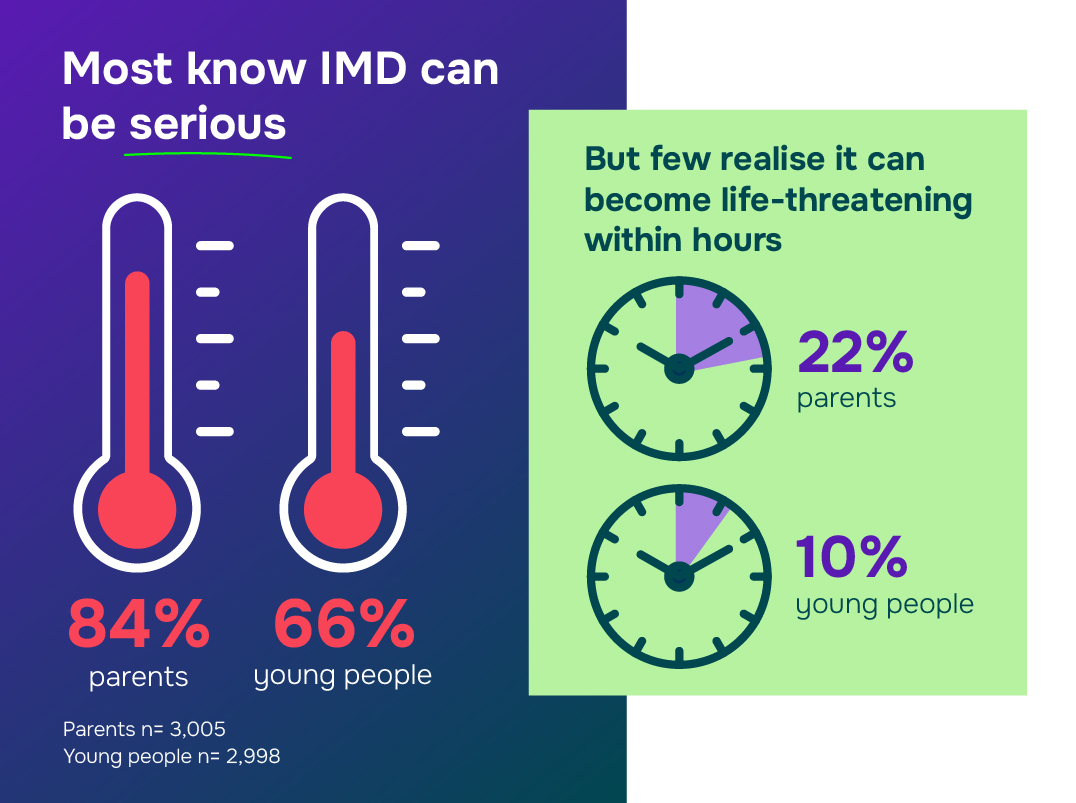
While 84% of parents and 66% of young people recognise IMD would be serious for an otherwise healthy child, adolescent or young adult, only 22% and 10%, respectively, recognise that IMD can become life-threatening within hours.1
Understanding of its potential consequences also varies: 79% of parents and 62% of young people recognise that IMD can lead to serious long-term physical health impacts.1
Improving understanding of how quickly IMD can progress and its potential consequences is an important part of helping people recognise the urgency of the disease, understand why early recognition matters and know when to act.
“The findings show the need for greater awareness of meningococcal disease and the important role healthcare professionals play in supporting timely recognition, prevention and informed decision-making.” – Tia Vincent, Vice President, Global Medical Lead, Vaccines, GSK
Young people face challenges in understanding their risk
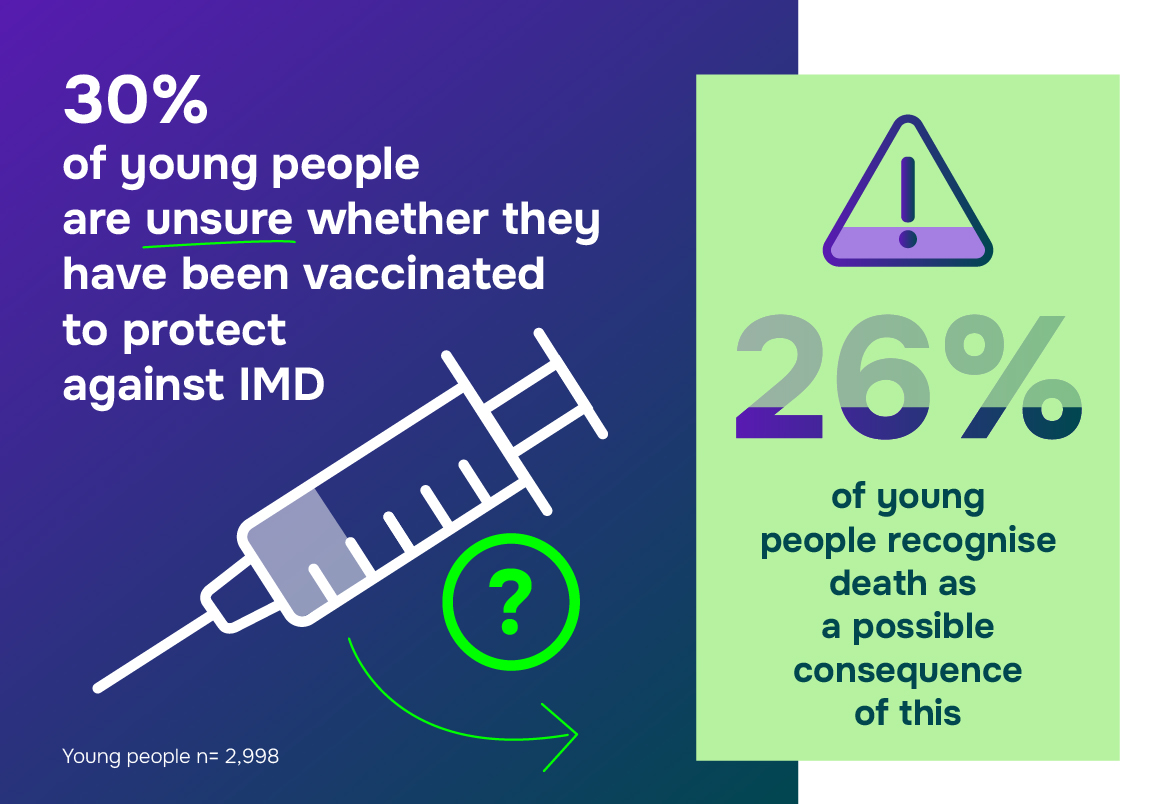
Beyond understanding how quickly IMD can progress, the survey highlights important gaps in young people’s knowledge of their own protection. Nearly one third (30%) of young people are unsure of their own vaccination status, compared with 12% of parents who are unsure whether their child has been vaccinated to protect against IMD.1
Only 26% also recognise death as a possible consequence of IMD, compared with 45% of parents, suggesting gaps extend from understanding the potential impact of the disease to knowing whether they themselves may be protected.1
These findings highlight opportunities to better tailor IMD communications for young people, helping them understand why the disease matters at their age, whether they are protected and when vaccination may be relevant to them.
Guidance from healthcare professionals matters as people navigate increasingly complex health information
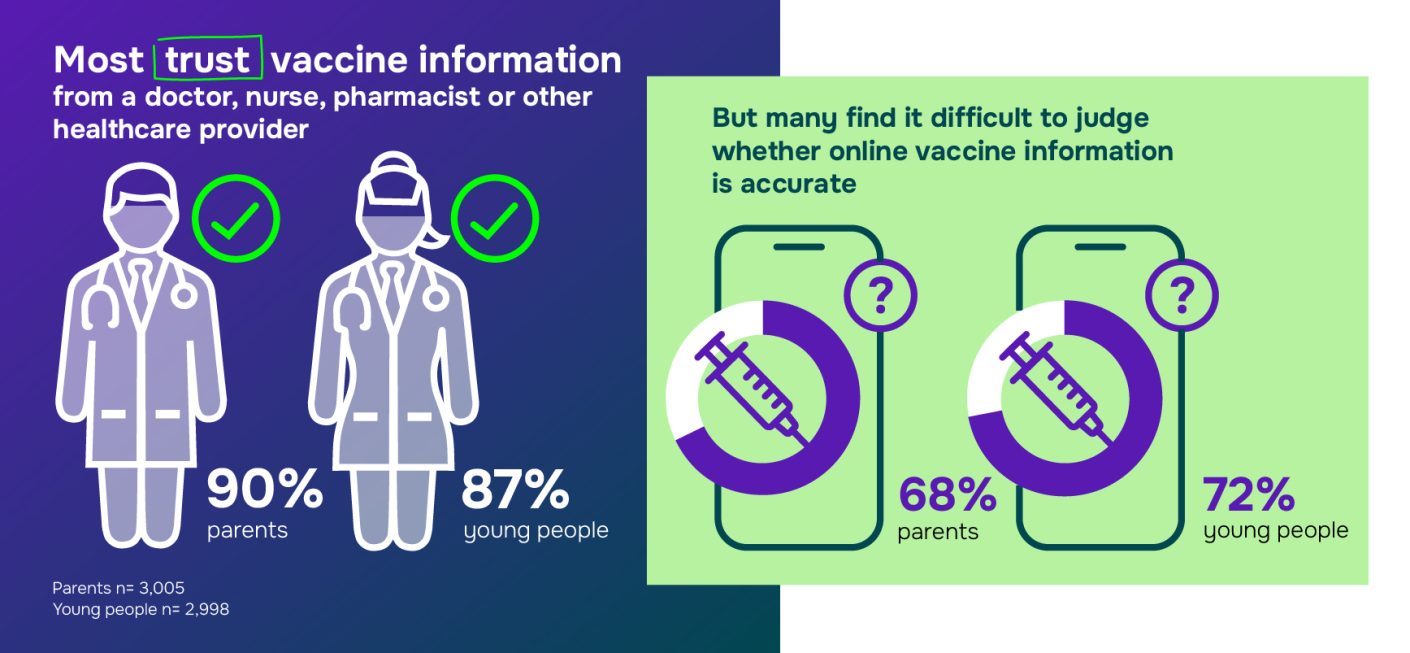
Healthcare professionals are the most trusted source of vaccine information, with 90% of parents and 87% of young people trusting information from a doctor, nurse, pharmacist or other healthcare provider. This trust sits alongside broad support for vaccination, with 86% of parents and 75% of young people agreeing vaccination is the right thing to do.1
However, many are navigating an increasingly complex information environment. More than half say they have become more cautious about vaccination since COVID-19, while around 7 in 10 find it difficult to judge whether online vaccine information is accurate.1 Young people are also more likely to encounter vaccine information on TikTok (25%) and Instagram (24%), while around 1 in 7 parents and young people already encounter vaccine information through AI tools such as ChatGPT, Gemini or Copilot.1
As the ways people access vaccine information continue to evolve, these findings reinforce the importance of trusted, expert-led guidance that helps people navigate uncertainty and make informed decisions.
Turning awareness into action
The survey findings indicate that IMD is recognised as serious, particularly among parents, but that this concern does not consistently translate into practical readiness. Many respondents, especially young people are less clear on how quickly IMD can become life-threatening, its consequences and urgency to act, and more likely to be unsure of their vaccination status. Although healthcare professionals remain highly trusted, online debate and the volume of vaccine information are contributing to caution and uncertainty. The data supports a clear communications opportunity: help people recognise that IMD can escalate within hours, check whether vaccination may apply, and know when and how to seek trusted advice. This World Meningitis Day, the opportunity is to turn awareness into action – helping more people understand the urgency of IMD, know where to turn for trusted advice and feel confident taking the next step.
References
1 Human8 on behalf of GSK. World Meningitis Day 2026 Survey (Argentina, Australia, Brazil, France, Italy and Spain). Data on file. 2026.
2 Wang B, Santoreneos R, Giles L, et al. Case fatality rates of invasive meningococcal disease by serogroup and age: A systematic review and meta-analysis. Vaccine. 2019 May;37(21):2768-2782.
3 European Centre for Disease Prevention and Control (ECDC). Invasive meningococcal disease: Annual Epidemiological Report for 2024 Available at: https://www.ecdc.europa.eu/sites/default/files/documents/invasive-meningococcal-disease-annual-epidemiological-report-2024.pdf. Last accessed: September 2026.
4 UK Health Security Agency (UKHSA). Meningococcal disease: clinical and public health management. Available at: https://www.gov.uk/guidance/meningococcal-disease-clinical-and-public-health-management. Last accessed: September 2026.
5 Marshall, G.S., McCormick, Z.L., Johns, J.S. et al. Understanding the Sequelae of Invasive Meningococcal Disease in the United States. Infect Dis Ther 13, 2213–2220 (2024). https://doi.org/10.1007/s40121-024-01026-w
6 Centers for Disease Control and Prevention. https://www.cdc.gov/pinkbook/hcp/table-of-contents/chapter-14-meningococcal-disease.html. Last accessed: September 2026.
NP-GBL-MNU-COCO-260002 October 2026