The overlooked impact of respiratory viruses, including RSV, on adults living with chronic health conditions
A new global survey commissioned and funded by GSK for RSV Awareness Week 2026 explores how respiratory viruses, including respiratory syncytial virus (RSV), can disrupt the health, independence and everyday lives of adults living with certain chronic health conditions.

Understanding the global health impact of RSV
RSV is a common contagious virus1 that affects the lungs and breathing passages and impacts an estimated 64 million people of all ages globally every year.2 Although RSV is often associated with infants and young children, it is increasingly recognised as a cause of respiratory illness among adults aged 60 and over.3 In developed countries alone, RSV was estimated in 2019 to have caused around 470,000 hospitalisations and 33,000 in-hospital deaths among this age group.*4
Adults living with chronic health conditions such as cardiovascular disease, diabetes, chronic kidney disease, asthma or chronic obstructive pulmonary disease (COPD) are at increased risk of severe RSV illness, which can progress to lower respiratory tract disease and hospitalisation. 5,6,7 For example one US study found adults with heart failure were 8 times more likely to be hospitalised due to RSV than those without,6 and another found that the true burden of RSV may also be underestimated because testing is not routinely carried out.7
The burden of respiratory viruses, including RSV, for adults at increased risk
A new global survey commissioned and funded by GSK examined how respiratory viruses, including RSV, affect adults living with chronic health conditions.8
Conducted online by Human8 between 15 July and 7 August 2026, the survey included 6,041 adults aged 18 and over across Australia, Brazil, Canada, Germany, Italy, Japan, Mexico, Poland, Spain and Taiwan. All respondents were living with at least one of the following conditions: cardiovascular disease, chronic kidney disease, diabetes, COPD, asthma or hypertension.8
Participants answered eight questions about their health priorities, their experiences and perceptions of respiratory viruses, how they manage their health, their experiences of RSV and their conversations with healthcare professionals.8
The findings suggest that the effects of respiratory viruses, including RSV, can extend well beyond the initial illness. 8 Respondents reported an impact on their mental health, reduced confidence in managing existing conditions and an increased need for support to complete everyday tasks without help.8
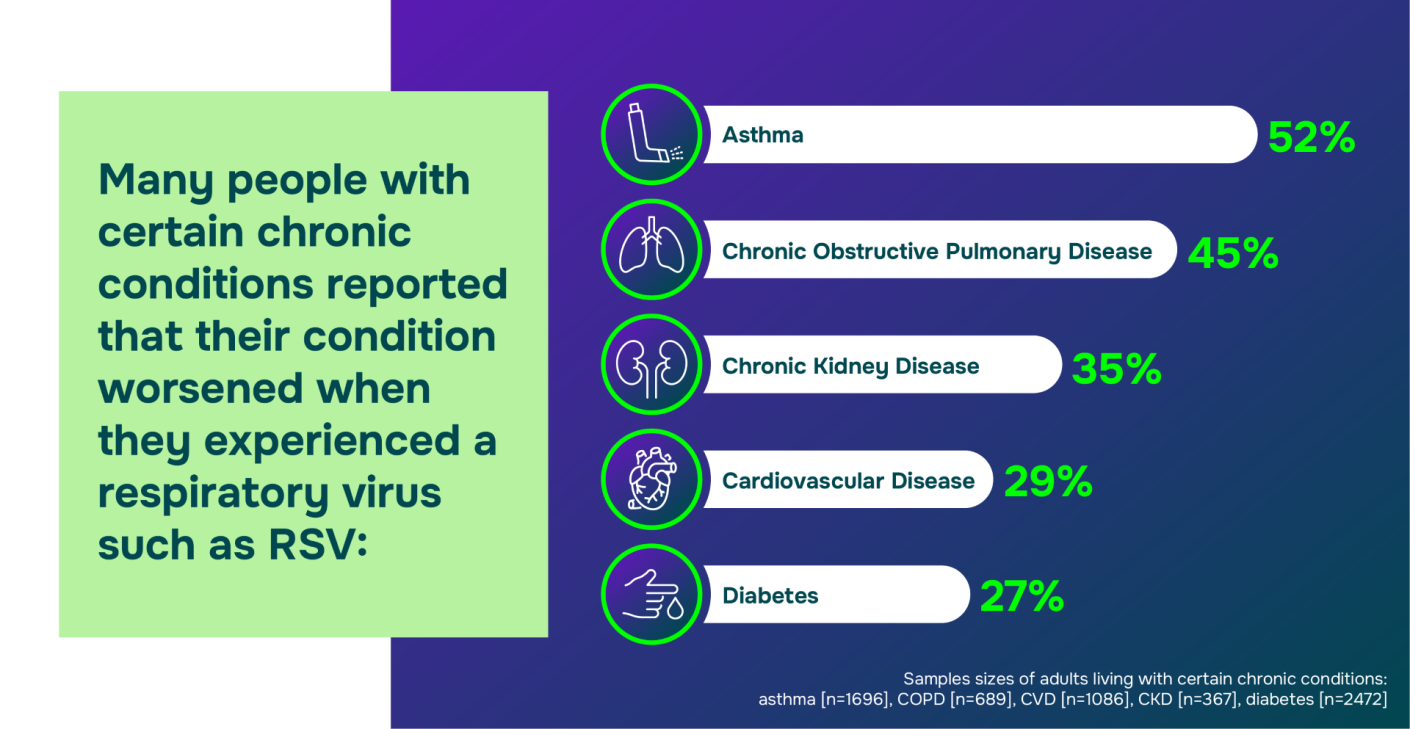
Symptoms of existing conditions also worsened for many people when they experienced a respiratory virus, such as RSV.8 This was reported by 52% of respondents with asthma, 45% of those with COPD, 35% of those with chronic kidney disease, 29% of those with cardiovascular disease and 27% of those with diabetes.8
Across all respondents, 36% said their recovery took longer than expected. One quarter needed additional appointments with a GP or primary care professional, while 18% visited urgent care.8
Country spotlight†
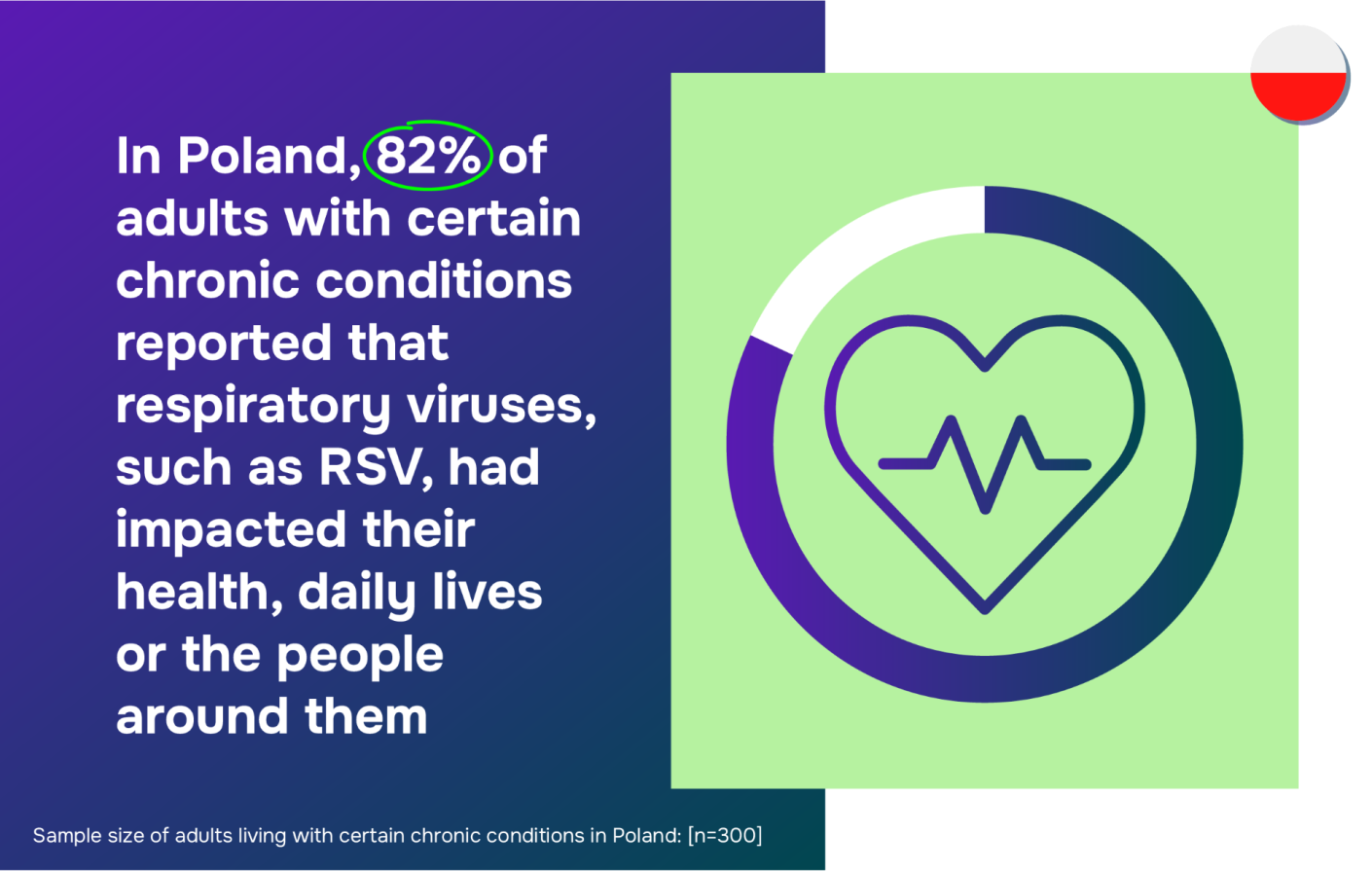
Behind the global findings are thousands of individual experiences across different countries. Looking at one country as an example, 300 respondents in Poland reported many of the same challenges seen across the wider survey, including disrupted health, worsening symptoms and ongoing concerns about respiratory viruses such as RSV. More than four in five Polish respondents, 82%, said respiratory viruses such as RSV had affected their health, daily lives or the people around them.8‡
Existing conditions were also affected, with 44% reporting that their condition had worsened when they experienced a respiratory virus such as RSV. Among Polish respondents who had experienced RSV specifically, 43% said their health had been disrupted for at least a month afterwards.8§
Concern about respiratory viruses is high, with 92% of respondents in Poland expressing concern about viruses such as RSV.8 However, almost one quarter, 24%, said they had never discussed RSV with a healthcare professional.8
For some, recovery from RSV takes months
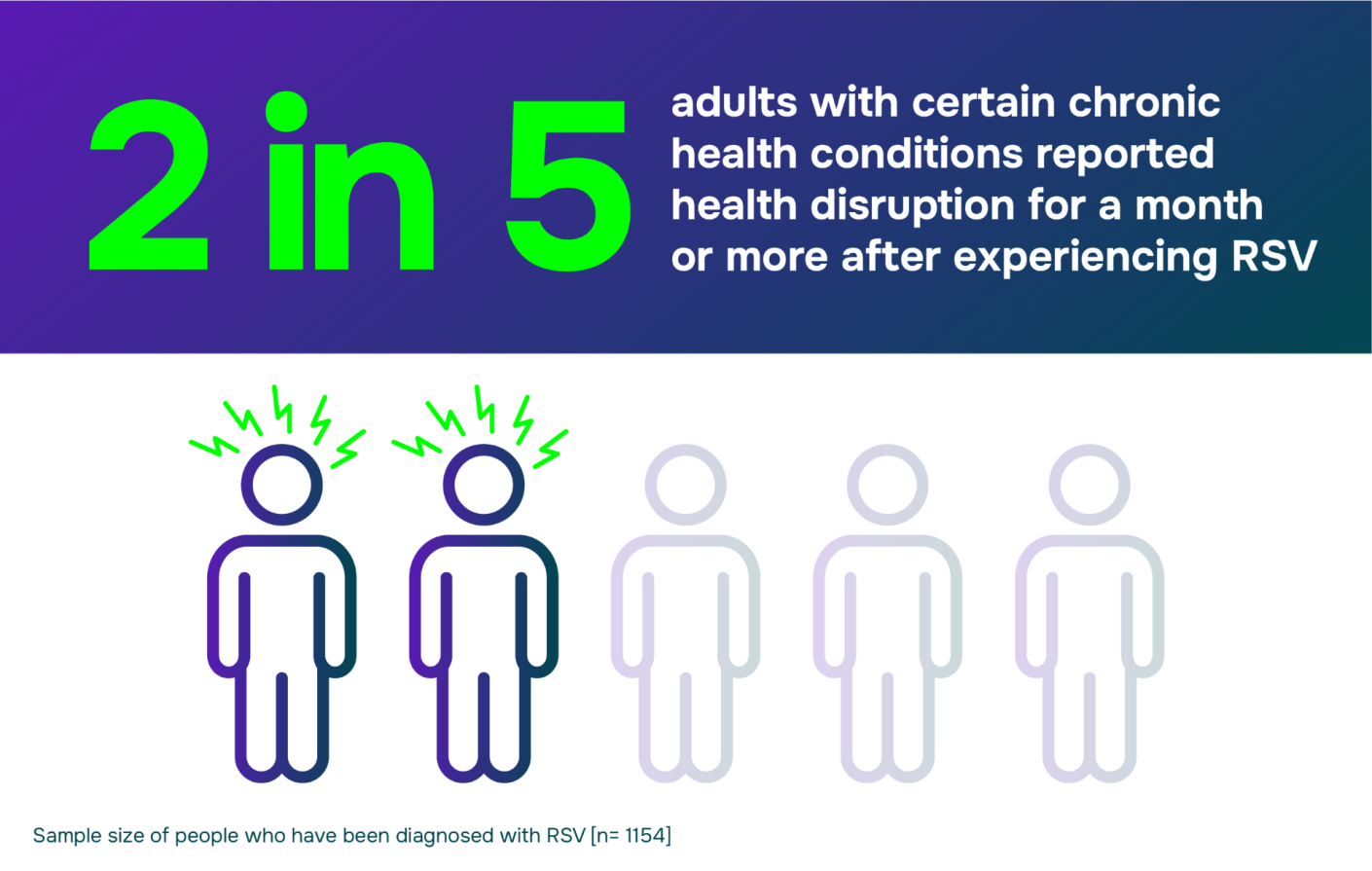
The prolonged impact of RSV seen in Poland is reflected globally.8 Across all countries combined, two in five who had experienced RSV said their health had been disrupted for at least a month.8** Nearly one in 10 said it had taken more than a year for their health to return to normal, or that they had still not fully recovered.8
More than half, 55%, described their RSV symptoms as moderate or very severe.8 This rose to 68% among respondents with chronic kidney disease or COPD, 64% among those with cardiovascular disease and 63% among those with asthma.8††
Concern is not always leading to conversation
Most respondents recognised that a respiratory virus, including RSV, could make their existing conditions harder to manage. Four in five, 79%, were concerned that a respiratory virus could interfere with the management of their chronic condition or worsen their symptoms.8
However, almost half, 46%, had not discussed RSV with a healthcare professional during the previous two years.9 This included one third who said they had never discussed it.8
Older respondents were less likely to have had a recent conversation about RSV. While 66% of adults aged 18 to 49 had discussed it with a healthcare professional within the previous two years, this fell to 45% among adults aged 50 and over.8‡‡
Take the next step and start a more informed conversation
For those at increased risk, RSV can worsen existing conditions, limit independence and disrupt daily life.8
Speaking with a healthcare professional can help people understand their individual risk and the steps they may be able to take to protect their health.
About the research
The RSV Awareness Week 2026 global survey was conducted online by Human8 on behalf of GSK between 15 July and 7 August 2026. It included 6,041 adults aged 18 and over living with one or more specified chronic health conditions across 10 countries, including 300 respondents in Poland.8
This research was commissioned and funded by GSK.
About GSK
GSK is a global biopharma company with a purpose to unite science, technology, and talent to get ahead of disease together. Find out more at gsk.com.
GlaxoSmithKline Biologicals SA, Rixensart, Belgium
©2026 GSK Group of companies or its licensor
References
1 Centers for Disease Control and Prevention (CDC). About RSV. Available at: https://www.cdc.gov/rsv/about/index.html Last accessed: October 2026.
2 National Institute of Allergy and Infectious Diseases, Respiratory Syncytial Virus (RSV). Available at: https://www.niaid.nih.gov/diseases-conditions/respiratory-syncytial-virus-rsv. Last accessed: October 2026.
3 Wildenbeest JG, et al. Respiratory syncytial virus infections in adults: a narrative review. Lancet Respir Med. 2024;12(10):822–836.
4 Savic M, et al. Respiratory syncytial virus disease burden in adults aged 60 years and older in high-income countries: a systematic literature review and meta-analysis. Influenza Other Respir Viruses. 2023;17(1):e13031.
5 Njue A, et al. Systematic literature review of risk factors for poor outcomes among adults with respiratory syncytial virus infection in high-income countries. Open Forum Infect Dis. 2023;10(11):ofad513.
6 Kujawski SA, et al. Rates of Respiratory Syncytial Virus (RSV)–Associated Hospitalization Among Adults with Congestive Heart Failure — United States, 2015–2017. PLoS ONE. 2022;17(3):e0264890.
7 Grace M, et al. Economic burden of respiratory syncytial virus infection in adults: a systematic literature review. J Med Econ. 2023;26(1):742–759.
8 Human8 on behalf of GSK. August 2026. RSV Awareness Week Survey of 6,041 adults aged 18 and over in 10 countries (Australia, Japan, Taiwan, Mexico, Brazil, Canada, Poland, Germany, Spain and Italy). Data on File.
* Figures represent modelled estimates for 2019 and were derived by applying pooled RSV burden estimates to the 2019 population of adults aged ≥60 years in high-income countries
† Sample size of adults living with certain chronic conditions in Poland: [n=300]
‡ Factors amounting to impact or health disruption include respondents who experienced the following consequences as a result of a respiratory virus: Loss of income due to time off work, Visited urgent care, Hospitalisation, Needed help from others with daily tasks, Reduced confidence in managing their condition, Longer recovery than expected, Additional General practitioner (GP)/primary care visits, Passed illness to household members or others, Negative mental health (e.g. anxiety or low mood), Worsening of existing condition.
§ Sample size of adults in Poland who had experienced RSV [n=47]
** Sample size of those who had experienced RSV across all countries n=1,154
†† Sample size of those who have had RSV who describe their symptoms as moderately severe or very severe across all countries and are living with a certain chronic condition: [CKD: n=135/200] [COPD n=225/329], [CVD: n=204/319], [asthma n=269/429]
‡‡ Sample size of adults aged 18-49 who had discussed RSV with a healthcare professional within the past two years n= 2,578. Sample size of adults aged 50 and over who had discussed RSV with a healthcare professional within the past two years n=3,463
NP-GBL-RSU-WCNT-260004 October 2026