How to break through the sea of sameness
When everything starts to look the same, human understanding and creativity become competitive advantages.
Tom De Ruyck
22 September 2026
7 min read
Why are brands, products and content starting to look the same? As more organisations respond to the same trends, data and technologies, differentiation is becoming harder. Here’s why we’re drifting into a sea of sameness and what brands can do to escape it.
When was the last time you saw a brand, product or piece of content and thought: I haven’t seen that before?
It’s becoming a surprisingly rare experience.
Whether we’re shopping, scrolling or streaming, many of the things around us are starting to feel remarkably similar. And it’s not just your imagination. In our What Matters 2026 study, more than half of people (54%) indicate that everything, from the clothes they wear to the content they consume, is starting to feel the same.
It’s a feeling we hear echoed across categories and markets. Brands, products and content increasingly seem to be converging around the same ideas and signals.
The result is what we call the sea of sameness: a growing sense that everything is becoming harder to tell apart. And for brands, it raises an important question: How do you stand out when everyone is drawing from the same playbook?
The rise of the sea of sameness
Once you start looking for it, the pattern appears everywhere.
Styles, ideas and aesthetics now travel faster than ever. Something that starts in a niche community can be adopted globally in a matter of days. Social platforms accelerate exposure, technology makes replication easier and globalisation means the same references increasingly show up everywhere. As a result, distinctive edges start to soften over time.
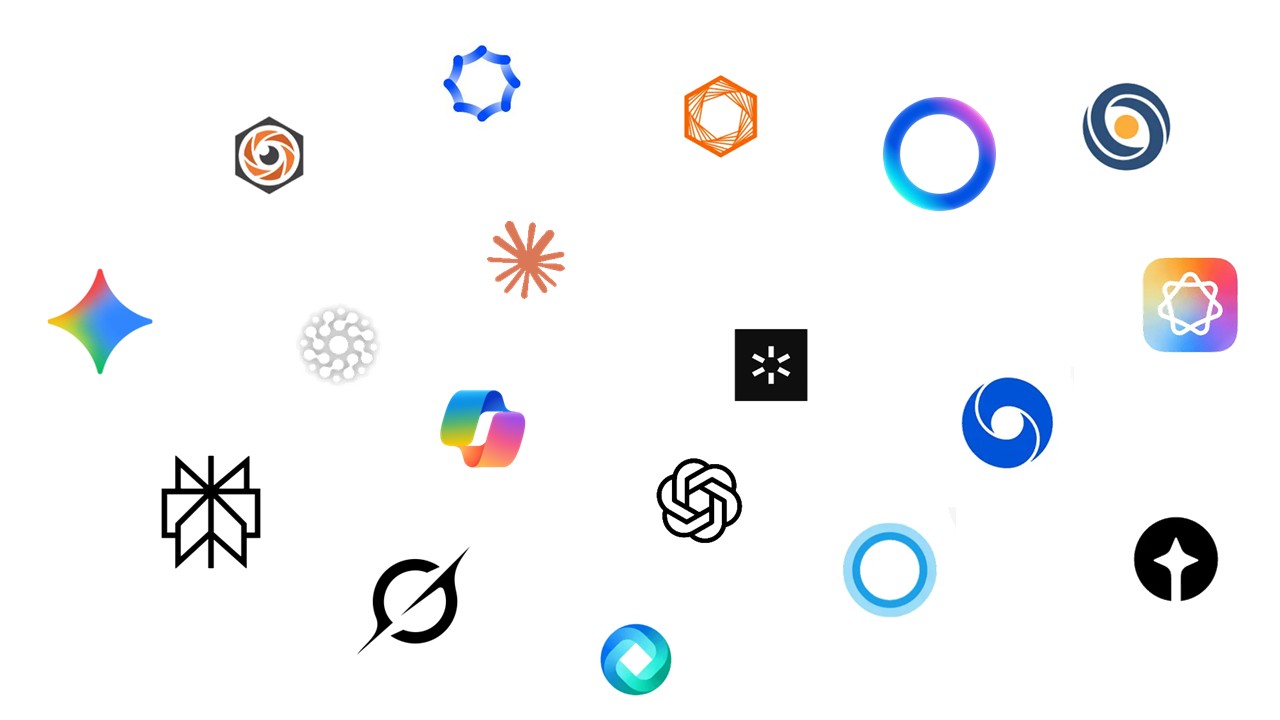
You can see this clearly in branding. Look at some of today’s leading AI companies and remove the names. Suddenly, telling them apart becomes surprisingly difficult with all logo’s sharing circular shapes, soft curves and organic forms. Similar visual cues used to signal intelligence, trust and innovation. They’re not necessarily copying one another. They’re simply responding to many of the same expectations and arriving at remarkably similar solutions.
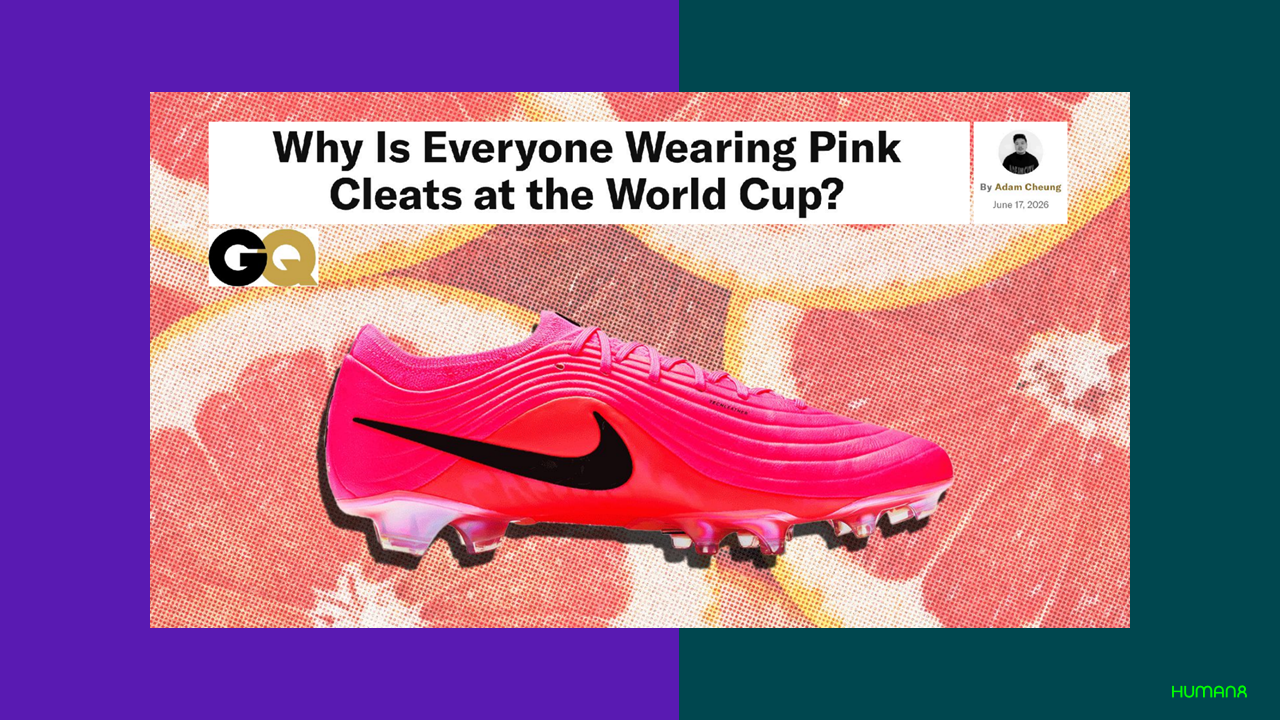
And it goes beyond branding. Around the 2026 FIFA World Cup, pink football boots seemed to be everywhere. Again, this wasn’t necessarily a case of brands copying one another. They were responding to the same signals: pink offered high visibility on the pitch and across social media, while trend forecasts had already identified electric fuchsia as a key colour for 2026.
Both examples point to the same underlying pattern. Brands, products and creators are increasingly drawing from the same pool of signals, references and cultural codes. And the more widely those signals spread, the harder it becomes to create something that feels genuinely distinctive.
AI amplifies this tendency. Because generative AI is built to recognise patterns, it naturally gravitates towards what is already common. Left on its own, it tends to converge on the statistical middle rather than something genuinely distinctive.
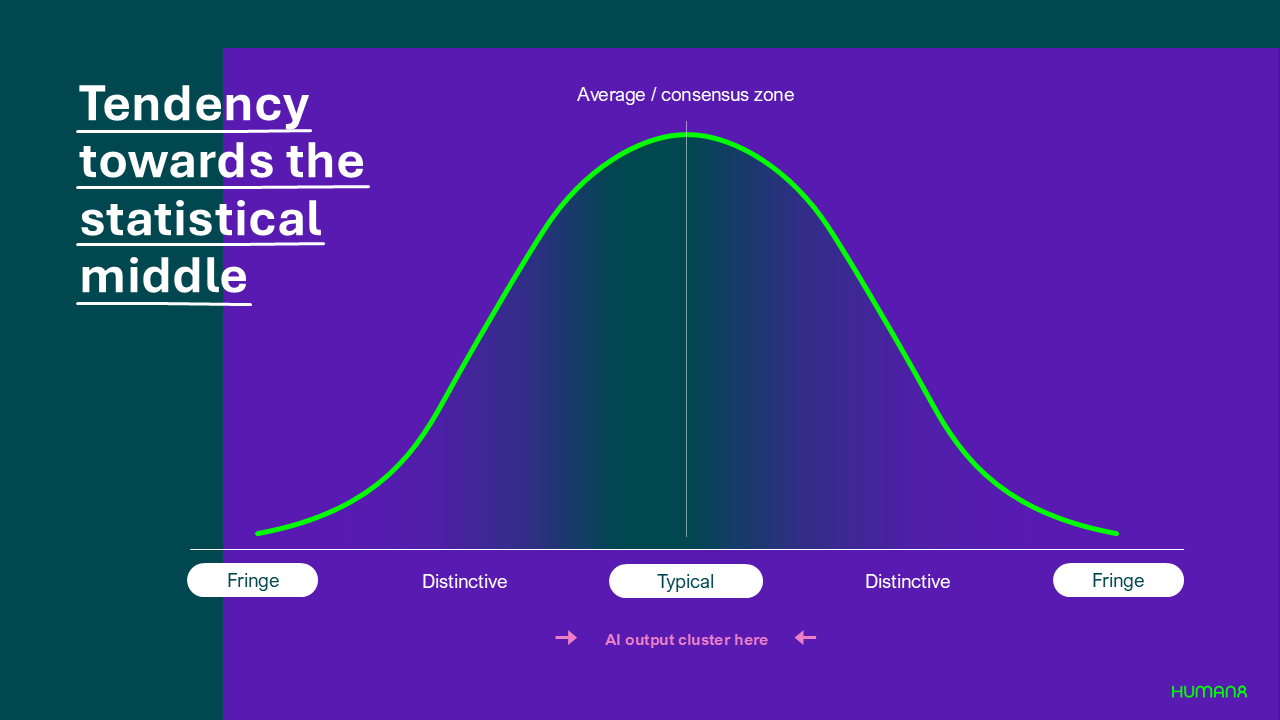
The result is that brands, products and content increasingly start to feel interchangeable. And people are noticing. In fact, our research found that 65% of people globally agree that most brands are interchangeable and only a few truly stand out.
That is how the sea of sameness grows. Not necessarily through copying, but through convergence.
Understand people in context
So how do brands break away from convergence?
The answer starts somewhere surprisingly familiar: understanding people.
Today, organisations have access to more consumer data than ever before. Yet having more data doesn’t automatically lead to deeper understanding.
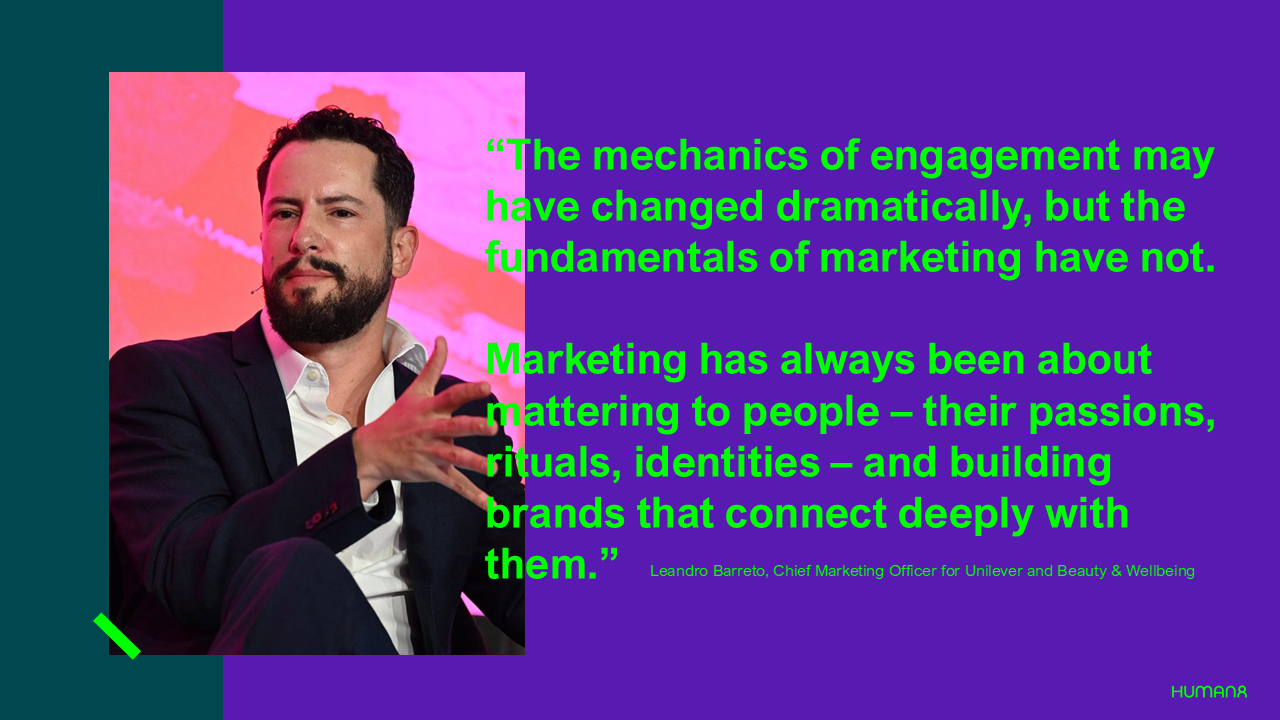
That means deeply understanding the individual: their emotions, motivations, needs and desires. But it doesn’t end there. People are shaped by their social worlds, cultural context, relationships, rituals and the things happening around them. If we would only study individual behaviour, we can miss what is actually driving it.
Brands that stand out often succeed because they understand something others overlook. Take Gentle Monster. Most eyewear brands focus on the product itself: better lenses, better frames, better designs. But the South Korean brand looked beyond the product and recognised a broader cultural appetite for surprise, discovery and self-expression.
It built its brand around what it calls “weird beauty”: surreal installations, unexpected objects and constantly changing displays. Its stores feel less like eyewear shops and more like stepping into a piece of contemporary art. The sunglasses are still the product, but they are no longer the whole experience. Gentle Monster didn’t differentiate by making eyewear better. It differentiated by understanding a cultural need that competitors were overlooking.

And that’s where differentiation often begins: by understanding what matters to people beyond the obvious functional need.
Make understanding travel
But understanding people is only useful if it travels throughout an organisation and truly shapes decisions. We tend to bring consumer understanding into the big strategic decisions, then lose it as we get closer to execution.
But brands aren’t built through a handful of big decisions. They’re built through hundreds and thousands of smaller ones: how a product is packaged, how a message is phrased, how an experience comes together, which features make it in and what content gets created.
The further away we get from the original research, the easier it becomes to make those decisions based on assumptions rather than people.
The irony is that the same technology that can reinforce sameness can also help organisations stay closer to real people. Digital twins, for example, can extend the value of research by creating AI-powered representations of real, individual consumers. When they are grounded in rich consumer and cultural understanding, they can help teams explore questions and pressure-test decisions while staying connected to the people behind the data.
We saw this with Taylors of Harrogate. Consumer research created the foundation. A twin community then allowed the team to explore concepts, pack variations and scenarios more quickly without returning to the full community every time. The research became a companion to the innovation process rather than a one-off input.
The important part is what the AI starts with. Without context, it can easily reproduce what is already common. Grounded in real people, it has much richer material to work with.
Put creativity to work
Human understanding helps you see opportunities, but creativity is what turns those opportunities into something distinctive.
And this is where the AI conversation sometimes gets stuck. We talk about whether AI is creative as though creativity is simply about producing an interesting idea.
But creativity is about more than generating ideas.
A recent study comparing AI with more than 100,000 people found that AI can outperform the average human on some creativity measures. But the top 10% of creative humans still outperformed AI, particularly on richer creative tasks.
AI can produce a lot of ideas. But originality also comes from knowing what to notice, what to challenge, what to combine and what might actually matter in the real world.
We saw this in an innovation project with a global candy manufacturer, where we compared internal ideation, GenAI and creative crowdsourcing. The strongest results came from combining different sources of creativity. The mixed approach was around five times more effective than internal ideation alone.
And context made a clear difference to the AI output too. Only 18% of the top ideas came from plain AI prompts. 36% came from AI enriched with domain expertise and constraints, while 46% came from AI enriched with consumer data.
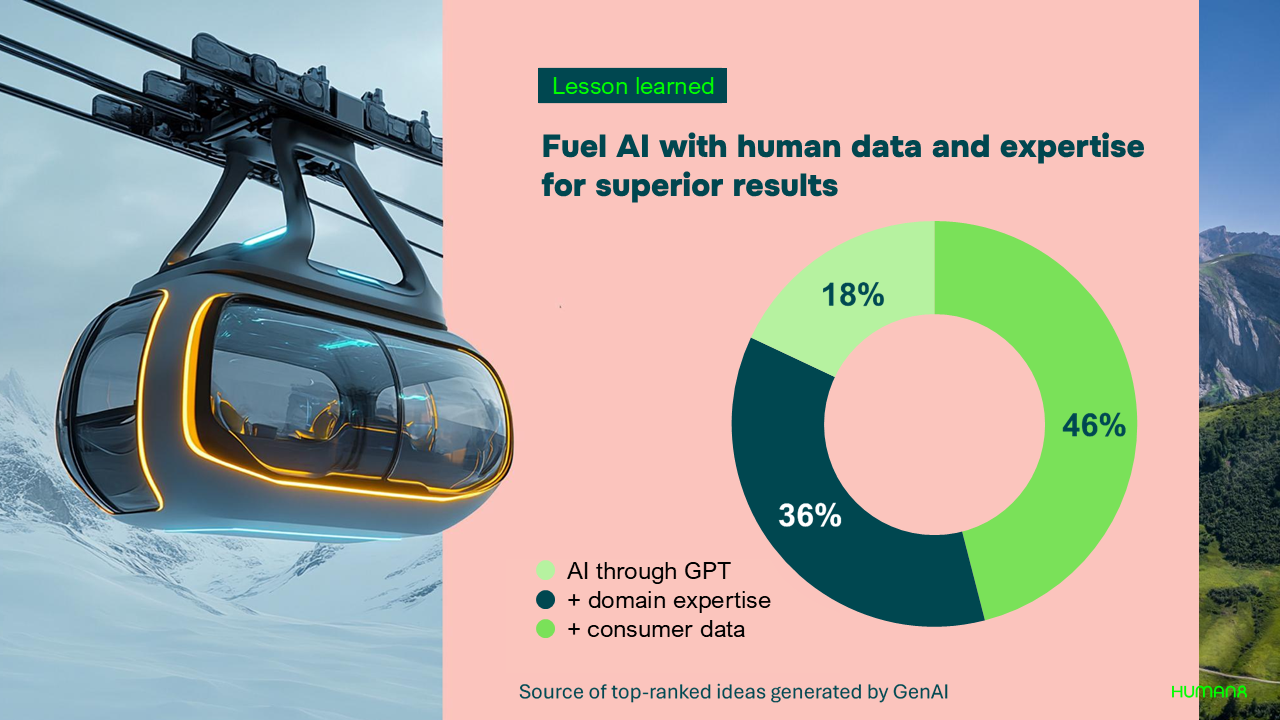
In other words, what you give AI to work with shapes what it can give back. The richer the input, the more room there is to go somewhere unexpected.
Escaping the sea of sameness
So what does it take to move beyond the average?
AI isn’t going away. Nor should it, it’s becoming part of the baseline. It helps us move faster, explore more possibilities and scale what we do.
But speed is not the same as distinction.
If everyone has access to the same tools and is feeding them broadly the same inputs, we shouldn’t be surprised when some of the outputs start to converge too.
The way out is to bring more of what makes people different into the process.
Understand people in their real lives, not just as data points. Look at the culture around them, not just their individual behaviour. Bring different perspectives into the creative process. And give people something to react to, challenge and make better.
FAQS
1. What is the sea of sameness?
The sea of sameness describes the growing convergence of brands, products, content and cultural signals, as more companies and creators draw from the same references, trends and technologies.
2. Why are brands starting to look the same?
Brands are increasingly responding to the same cultural signals, consumer expectations, platforms and technologies. As ideas travel faster and become easier to replicate, distinctive differences can start to disappear.
3. Can AI make brands less distinctive?
AI can contribute to sameness when everyone uses similar tools and inputs to generate ideas. Because language models draw on existing patterns, poorly contextualised AI can reproduce what is already common. Using richer consumer data, domain expertise and creative constraints can help produce more distinctive outputs.
4. How can brands escape the sea of sameness?
Brands can start by understanding people in the context of their real lives, culture, relationships and rituals. They can then use that understanding throughout the innovation process and combine it with creativity and AI enriched by consumer data, expertise and constraints.
5. Can digital twins help brands understand consumers better?
Digital twins can extend the value of consumer research by creating AI-powered representations of individual real consumers. When grounded in rich consumer and cultural understanding, they can help teams explore questions and pressure-test decisions while staying connected to the people behind the data.