Four ways digital twins bring the consumer voice into the room at scale
How AI-powered representations of consumers help organisations make faster decisions without losing human understanding.
Annelies Verhaege
30 July 2026
7 min read
Digital twins are AI-powered representations of consumers built on existing research. They help organisations apply consumer understanding to everyday decisions, explore future scenarios and unlock the full value of existing insights.
AI is changing the way organisations work. Ideas can be generated in seconds, scenarios can be explored faster than ever and decisions are increasingly supported by intelligent tools. But speed alone doesn’t create better decisions. The challenge is making sure AI remains connected to the people behind the data: their needs, behaviours, motivations and contexts.
This is where digital twins come in. Built on consumer research, these AI-powered representations of consumers help organisations explore ideas, challenge assumptions and bring the consumer perspective into more moments of decision-making. They are not a replacement for consumer research or human understanding. They are a way to extend the value of the initial consumer research, bringing the consumer voice in the room at scale and at speed.
Here are four situations where digital twins can help organisations move faster while staying closer to the people they serve.
1. Bringing consumers back into everyday decisions
You’ve just completed six months of innovation research. The final presentation has been shared, the recommendations agreed and everyone moves on to the next project. But the real work is only beginning. Over the coming weeks, dozens of decisions need to be made. Which claim should go on pack? Which colour stands out more? Which campaign message is most persuasive? Which product feature should be prioritised?
Often these questions individually don’t justify commissioning new research. So organisations do what they’ve always done. They ask the people in the room. The problem is that marketers aren’t always as good at predicting consumer reactions as they think. Every time consumer understanding is replaced by internal opinion, organisations risk drifting a little further away from the people they’re trying to serve.
Traditionally, research has a beginning and an end. Teams define a question, conduct a study and turn the findings into a report. Digital twins change that dynamic. Instead of letting valuable insights disappear into presentation decks, organisations can continue building on what they’ve already learned. Teams can explore everyday questions using twins grounded in existing research, rather than starting from scratch every time.
Research becomes less like a finished project and more like a living asset. That doesn’t mean every decision should be based on simulations alone. Choosing between two front-of-pack claims or comparing campaign messages is very different from deciding whether to launch a major innovation or make a significant investment. The higher the risk, the more important fresh validation with real consumers remains. But for many everyday decisions, digital twins make it possible to bring the consumer voice into conversations where it would otherwise be missing.
2. Beyond more ideas: finding the ones that matter
Ask generative AI for campaign ideas and you’ll rarely be short of options. By lunchtime, your team might have a hundred headlines, fifty campaign concepts and dozens of social posts. Creating ideas is becoming effortless, but choosing the right ones is becoming the real challenge.
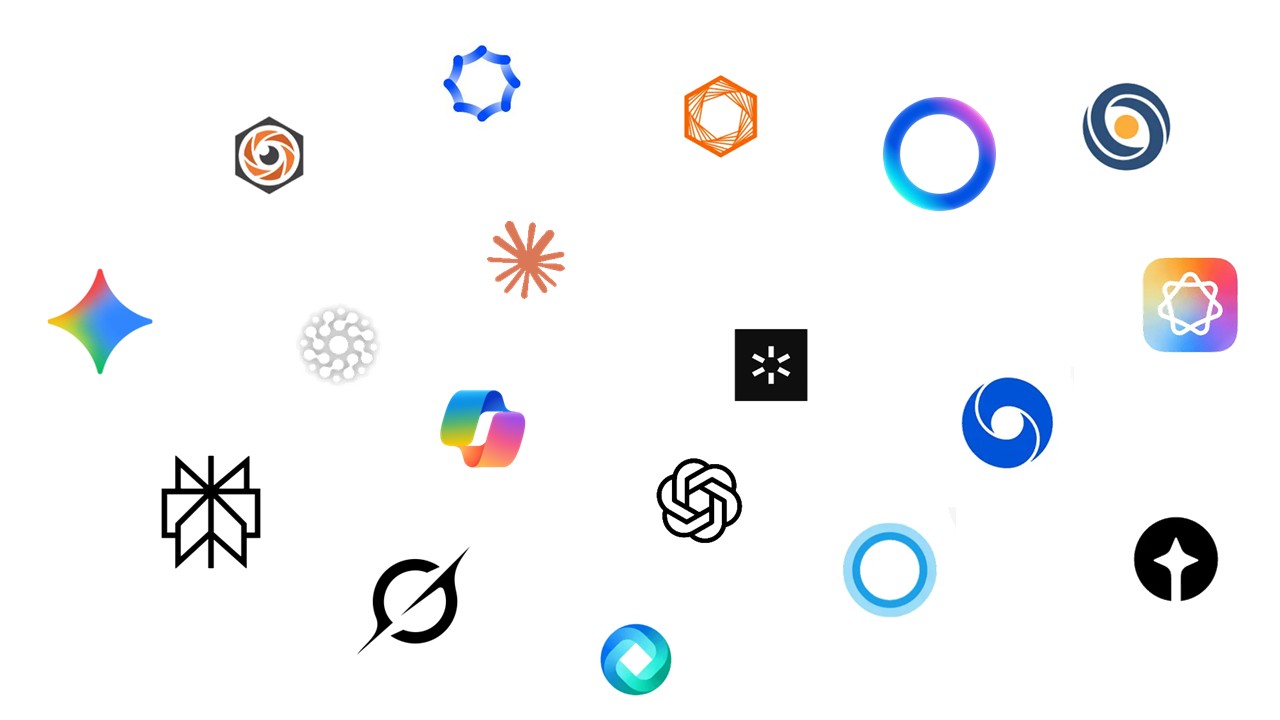
As AI becomes embedded in marketing workflows, a new question emerges. If everyone is using the same models trained on the same internet, are we all becoming more alike? Our What Matters trend research suggests that’s already happening. Across 16 markets, 65% of consumers told us brands feel interchangeable. That’s hardly surprising. Generative AI is brilliant at recognising patterns. It predicts what is most likely based on what already exists. The result is efficient content, but not always distinctive thinking. Look at AI branding itself. Many AI companies have converged around a similar visual language: circular shapes, soft gradients and a central focal point. Even in an industry built around creating what comes next, the brands themselves can start to look remarkably alike.
Digital twins bring something different. While generative AI is trained on the internet, digital twins are grounded in real consumer data. Instead of asking a generic model what might work, marketers can explore how their own consumers might respond to different ideas, messages and creative directions. In our own experiments, generic AI and consumer digital twins sometimes reached similar conclusions. But the differences were often the most valuable part. Generic AI tended to reinforce familiar category conventions. Digital twins surfaced tensions, unmet needs and perspectives rooted in real consumer experiences.
As AI makes idea generation faster, the harder question becomes which ideas are worth investing in. Companies such as Colgate-Palmolive are already exploring digital twins to accelerate innovation and prioritise concepts before validating the strongest ideas with real consumers. AI can expand the creative possibilities, but digital twins help bring the consumer perspective into the choices that follow.
3. Exploring possible futures before they arrive
Imagine you’re shaping your customer experience strategy for 2030. Should you invest more in physical retail? How much customer service could become AI-powered? Will premium experiences matter more or less? How will ageing populations or economic uncertainty reshape expectations? Nobody has all the answers, but waiting for the future isn’t an option.
Digital twins aren’t designed to tell organisations exactly what consumers will do in the future. They help teams explore different possibilities and understand how expectations might evolve in response to change. After all, many of the shifts that have transformed consumer behaviour over the past decade weren’t difficult to spot. We saw the rise of self-checkout, subscription-based services, buy-now-pay-later models, remote and hybrid work and now generative AI. The harder part was understanding how people would adapt, which new needs would emerge and how those changes would reshape expectations.
By simulating different scenarios, organisations can explore these questions before decisions are made. They can challenge assumptions, identify strategies that remain relevant and spot opportunities earlier. The goal isn’t to predict exactly what will happen. It’s to be better prepared for the different possibilities ahead.
A useful way to think about digital twins is as a flight simulator. Pilots don’t train in simulators because they know exactly what will happen. They train because they want to be ready for different situations. Digital twins offer organisations the same opportunity. They create a safe environment to test assumptions before real-world decisions carry real-world consequences. Uncertainty won’t disappear, but organisations become better prepared to navigate it.

Watch: How digital twins can help organisations make better decisions
In this short video Annelies Verhaeghe, Chief Innovation Officer at Human8, explores how digital twins can support everyday decision-making, accelerate creativity and help organisations prepare for possible futures.
4. Turning research into an active intelligence asset
Every insights team knows the feeling. Someone asks a question and somebody says, “I’m sure we researched that a few years ago.” The search begins: old PowerPoint decks, research repositories and forgotten folders. The answer is probably there somewhere. Finding it is only half the battle.
Most organisations don’t have a shortage of consumer knowledge. They have a shortage of ways to activate it. Traditional knowledge management helps teams find information. Digital twins can go further by making it possible to engage with the consumer understanding behind that information.
Instead of simply retrieving what a research study found, digital twins allow organisations to revisit the richness behind the findings. Each twin is grounded in a real research participant, capturing the behaviours, motivations, experiences and contexts that shaped their perspective. Rather than representing an average consumer, digital twins preserve the diversity within a consumer group and help organisations explore how different people might respond to certain situations. That’s important because consumers are rarely as simple as the headline findings in a research report suggest. Over time, the nuance behind research often gets lost as insights are condensed into a few key takeaways, personas or audience descriptions. Digital twins help preserve that complexity, making it easier to activate consumer understanding long after the original project has ended.
As such research becomes more than a snapshot of the past. It becomes an ongoing source of consumer intelligence that teams can continue learning from and applying.
The future isn’t more research. It’s making better use of what you already know.
Most organisations don’t need more consumer data. They already have years of research, insight and experience. The challenge is making that understanding available when decisions are being made.
This is where digital twins have the greatest potential. They extend the role of consumer understanding by keeping real people at the centre of everyday decisions, while complementing fresh research when it matters most.
In a business environment where organisations are expected to move faster every year, that may be their greatest contribution: helping teams move with confidence while staying connected to the people they’re designing for.
FAQS
1. What is a digital twin?
A digital twin is an AI-powered representation of a consumer built on existing research. It allows organisations to explore how consumers might respond to ideas, concepts or scenarios by building on real consumer understanding rather than generic AI knowledge.
2. What is the difference between a digital twin and an AI avatar?
AI avatars bring personas or consumer segments to life through conversation. Digital twins go further by modelling real individuals, grounded in research with actual participants. They preserve the diversity within a consumer group and help organisations explore how different people might respond in different situations.
3. Can digital twins replace consumer research?
No. Digital twins work best alongside traditional research. They help organisations apply existing insights more often and more quickly, while important strategic decision should still be validated with real consumers.
4. What kinds of decisions are digital twins best suited for?
Digital twins are particularly valuable for everyday decisions such as evaluating campaign messages, prioritising product features, exploring innovation ideas and testing future scenarios. For high-risk decisions, they should complement, not replace, research with real consumers.