Beyond bots: why the real CX challenge isn’t automation, it’s understanding people
As AI reshapes customer experience, the real challenge is not deciding what can be automated, but understanding the moments where people need to feel understood.

Tim Wragg
02 July 2026
6 min read
This blog is based on an article in Forbes, published in August 2025.
Customer experience is no longer about choosing between humans and AI, but about deciding what to automate, for whom and when human interaction truly matters. The real challenge is not more automation, but better understanding of the moments where people still need to feel understood.
A few weeks ago, I used my bank’s AI chatbot to sort something out. It was quick and frictionless. Exactly what you want when the question is simple.
But then I added a second question and a third. The situation became slightly more complex and slightly more specific. And suddenly, the experience shifted. The answers were still fast, but they stopped feeling helpful. The nuance disappeared and I found myself rephrasing, repeating and trying to “fit” my problem into the system.
And that’s where things start to fall short. The issue isn’t that AI doesn’t work. It’s that it doesn’t always understand. We’re seeing this tension everywhere. Technology is getting better, faster and more capable by the day. And yet, at the same time, people are becoming more sensitive to what’s missing when everything is optimised for efficiency.
That’s also what we saw in a global survey conducted across 16 markets as part of our What Matters trends report. While 76% globally think technology makes their lives easier, 64% fear the human touch will be lost because of AI. And 80% say they are more likely to trust real-life experiences than data-driven tools when seeking advice. So, while people value what technology enables: speed, convenience, simplicity, there’s also an increased awareness of its risks.
Which brings us to a more important question. Not whether to automate, but what to automate, for whom and when it actually matters.
Automation isn’t the problem. Misplaced automation is.
For years, we’ve treated automation as a straightforward win. More AI will bring more efficiency and better experiences. But that logic only holds if all customer interactions are the same.
They’re not.
Some moments are simple and predictable. Others are layered, emotional, even stressful. And when we apply the same automated logic to both, we start to see cracks.
Think about it:
- Checking a delivery status? Perfect for automation.
- Resolving a billing issue that doesn’t quite add up? Very different story.
In the first case, speed is everything. In the second, reassurance matters more. And yet, many organisations design journeys as if those moments carry the same weight. They optimise for efficiency, but overlook experience.
Start one step earlier: do you really understand people?
Before asking what to automate, there’s a more important question: do you understand the person behind the interaction? Not just what they’re doing. But how they’re feeling. What they expect in that moment. What context they bring with them.

Because customer expectations are liquid, not fixed. They’re constantly shifting based on context, mood and circumstance.
- A customer at 9am behaves differently from the same customer at 9pm
- A loyal customer expects something different than a new customer
- One person values speed above all; another values reassurance
This is where many CX strategies fall short. They’re built around processes, not people. While in fact, holistic human understanding should be the foundation. Without it, automation becomes guesswork. And guesswork doesn’t scale well.
What great brands get right
The brands that stand out today aren’t the ones that automate everything. They’re the ones that make deliberate choices. They use automation where it adds value and protect human interaction where it creates meaning.
Estée Lauder is a great example of this balance. They use generative AI to speed up internal processes, from content creation to categorising customer queries. It drives efficiency where it should. But what stands out is where they choose to go further. They developed a voice-enabled app to help visually impaired users apply makeup independently, using real-time audio feedback to guide them.
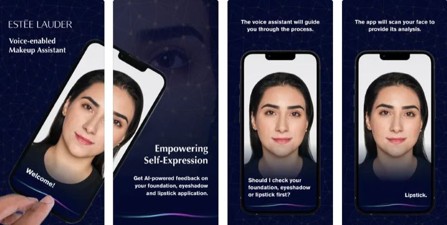
It’s a simple idea, but a powerful one. It’s not just automation for efficiency, but technology designed around a real human need. Because beauty is personal. It’s tied to identity, confidence and culture. The role of technology isn’t to take over, but to support people in expressing that themselves.
In retail, where automation is rapidly scaling, IKEA offers a different perspective on what AI can unlock. They introduced an AI chatbot, Billie, to handle routine customer service queries. It worked so well that it quickly took on a significant share of inbound requests. Which raised a bigger question: what happens to the people behind those interactions? Instead of reducing headcount, IKEA chose to rethink the role of their teams. Thousands of customer service employees were retrained as interior design advisors, helping customers with more complex, personal decisions about their homes. While AI handles the repetitive, people focus on what requires judgment, creativity and empathy. This approach didn’t just improve the experience. It helped scale a service that customers are willing to pay for.
The trap: mistaking efficiency for loyalty
One of the biggest risks with automation is what I would call a loyalty illusion.
From the inside, everything looks better:
- Faster response times
- Lower costs
- Higher automation rates
But from the outside, the experience can feel colder, more distant. Because we start measuring success through operational metrics, not human ones. A query resolved quickly doesn’t mean a customer feels heard or understood. A smooth interaction doesn’t guarantee trust.
Designing experiences around real human moments
So how do we get this right?
It doesn’t start with more technology, but with better understanding.
First, understand how different people experience technology emotionally, not just functionally. How do expectations change according to context, culture, age and mindset? In practice, this means complementing behavioural data with qualitative insight. Numbers reveal what people do; conversations reveal why it matters. Organisations that regularly combine both are far better equipped to design AI systems that respond to emotional reality, not just functional demand.
Second, identify which moments matter most and which can be handed over to machines. Journey mapping research helps ground this in real human behaviour, showing where automation works well and where human presence still matters more.
Third, understand where novelty delights and where it turns into friction or fatigue. This is where companies can use AI to provide human agents with real-time insights, enabling them to deliver a more personalized service.
Finally, amplify the emotion by identifying the moments in the customer journey where human interaction has the greatest emotional impact, those signature moments of delight that people actually remember. Take pet food brand Chewy as an example. The company uses automation and digital tools across its operations, but when a customer reaches out after the loss of a pet, the experience changes completely. Instead of staying within automated flows, Chewy often responds with personal gestures such as handwritten condolence cards or even flowers. It is a deeply human response, delivered at exactly the moment it matters most.
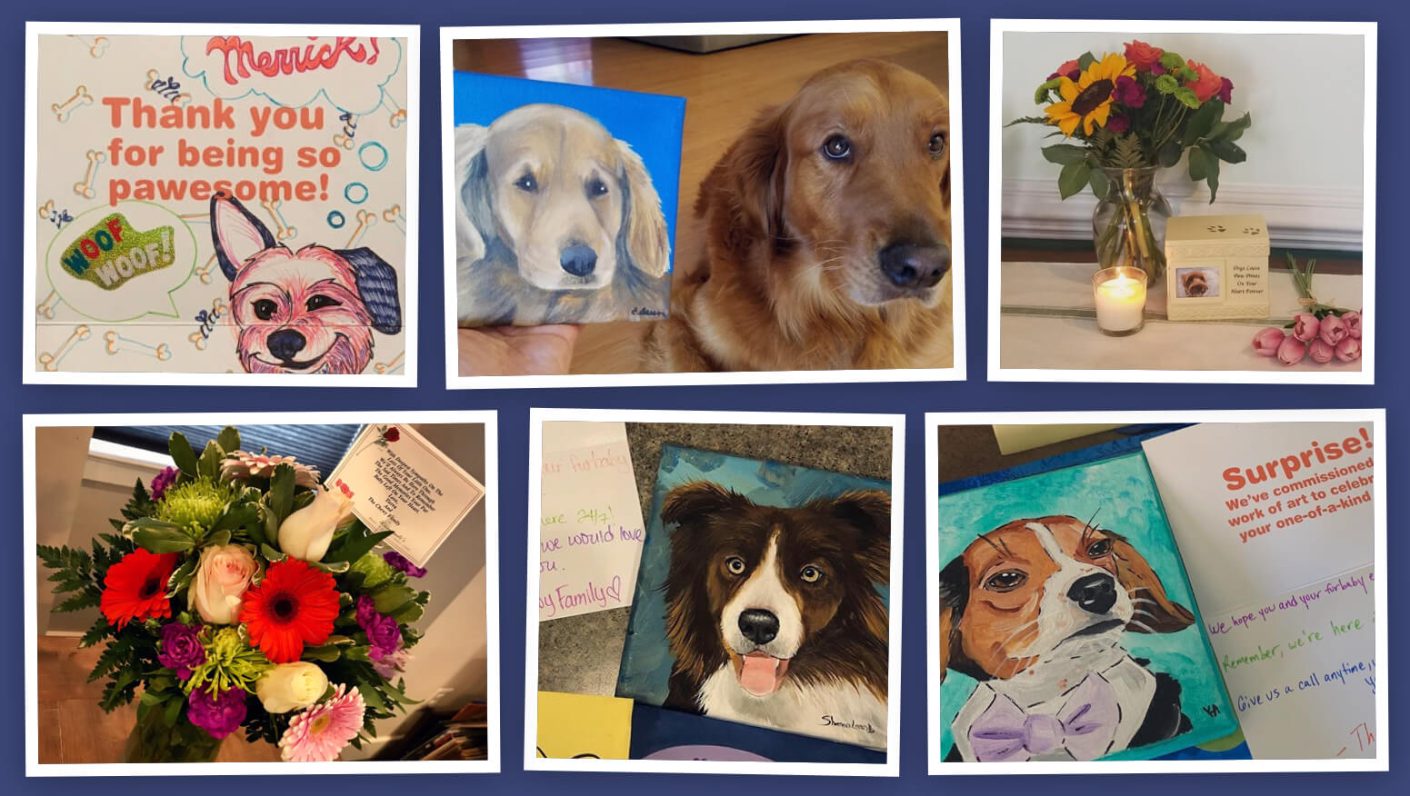
And that is the point. The value is not in automating everything. It is in knowing when a human response is needed and designing for those moments intentionally. What Chewy shows is that this is not about isolated gestures. It reflects a deeper way of understanding customer moments; what they mean, when they matter and how they should be responded to. Through this deeper understanding, brands can design automation that feels supportive rather than imposed.
The future of customer experience won’t be shaped by technology alone. It will be shaped by how well we understand the people experiencing it. Because when technology is designed around real human needs, the result is an experience that doesn’t just work. It feels right.
FAQS
1. What is the key challenge in using AI for customer experience?
The key challenge is not whether to use AI, but what to automate, for whom and when human interaction is still needed to ensure trust, empathy and understanding.
2. Should companies fully automate customer service with AI?
No. AI works well for simple, repetitive tasks, but full automation can reduce emotional connection. The most effective customer experiences combine AI efficiency with human support in complex or sensitive situations.
3. When should human interaction be used instead of AI?
Human interaction is most important in moments of emotional intensity, complexity or uncertainty, such as complaints, financial decisions or personal issues where reassurance and judgment matter.
4. What are “signature moments of delight” in customer experience?
Signature moments of delight are key points in the customer journey where human interaction creates emotional impact, trust or surprise. These moments are often what customers remember most.
5. How can companies decide what to automate?
Companies can use journey mapping and qualitative research alongside behavioural data to understand customer emotions and context. This helps identify which moments are suitable for automation and which require human involvement.
6. Why is human involvement still important in AI-driven experiences?
Human involvement is essential because AI cannot fully replicate empathy, trust or nuanced understanding. In high-stakes or emotional situations, humans provide reassurance and meaningful connection.